Tennis footwork drills: the ten every serious player should do
The reason most club rallies end on the second or third shot is not the stroke. It is the feet. Ten drills, four families, and the timing research on the split step that most players have never seen.
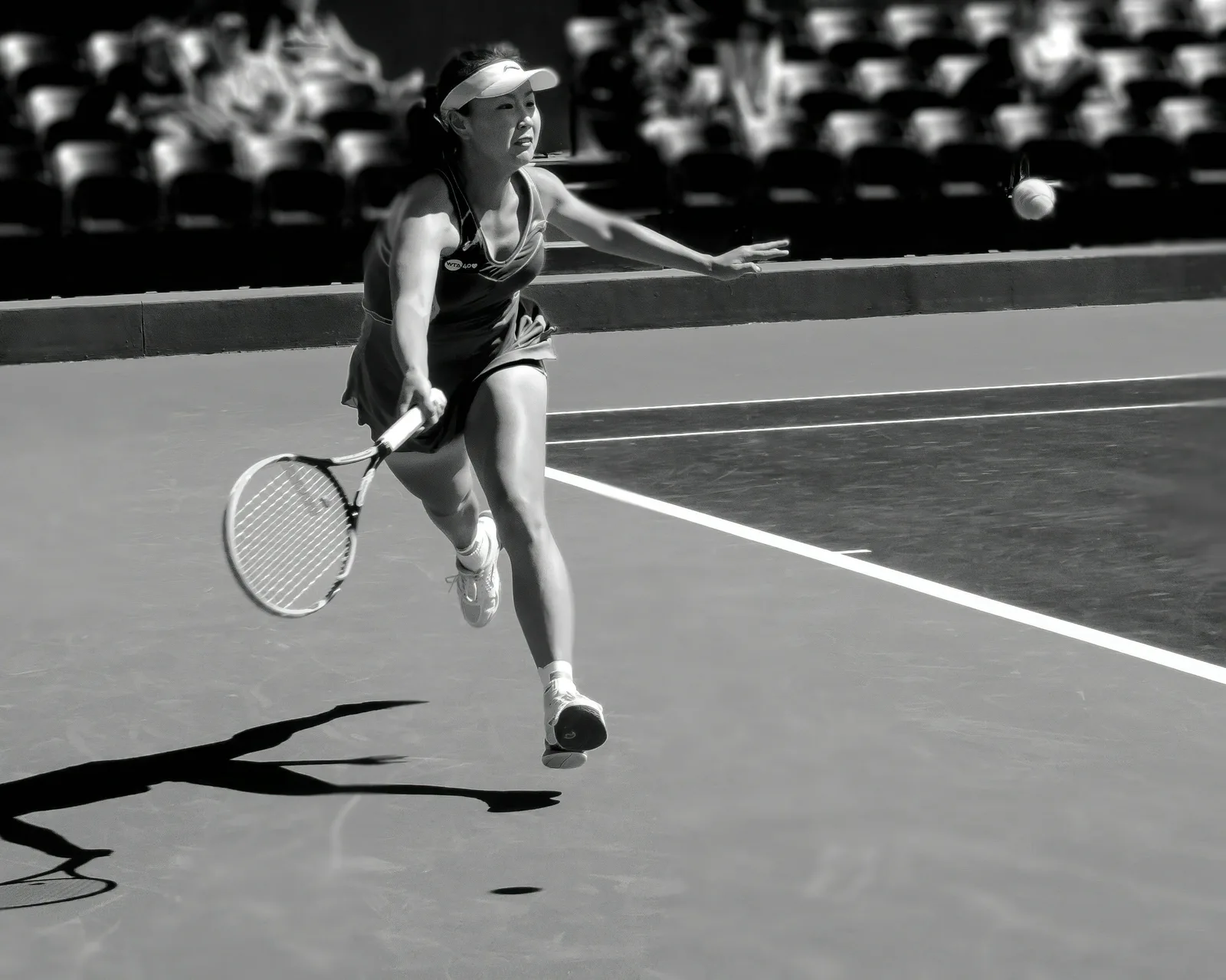
Footwork is not one skill. It is four working together: the timing that puts you in balance before the shot lands, the first step that starts the response, the small adjustments that allow your body to arrive at the ball with enough space between it and the ball to allow a shot in front of your body not behind it, and the recovery that gets you back into position. This piece works through ten drills that train those four, with the specific research on the split step (when to initiate it, how high to jump, and why it matters).
What footwork actually trains
Four families of movement, each addressing one of the four things the feet have to do.Four families of movement, each addressing one of the four things the feet have to do.
Timing: the split step
A small vertical hop performed just before the opponent contacts the ball. The point is not the jump itself; the point is what the jump does to the body. The push-off pre-tensions the calves, hamstrings and glutes, and the landing arrives with the stretch-shortening cycle primed to fire in whichever direction is needed. Research puts the reaction-time saving at up to 23%, and one study on volleyers found that a well-timed split-step gained 25% more time and roughly 60 centimetres of reach at the net compared to a late one (research summary via Mattspoint Tennis).
Two elements of the split step are worth knowing precisely.
When to initiate. The hop starts just before (roughly 0.08 seconds) the opponent contacts the ball, with the peak of the jump timed to their moment of their contact (Long Island Tennis Magazine on timing, Feel Tennis on the mechanics). If you are inside the baseline or at the net you initiate slightly earlier, as the opponent starts the racket moving forward, because the ball arrives faster. If you are at the baseline after hitting a good deep shot, you have a fraction longer and can wait until just before contact. Doing it as they hit is a little late but not too bad. Doing it after they hit is what most club players do, and it costs them the fraction of a second the whole rally depends on.
How high to jump. Small. A few centimetres off the ground is enough. The purpose is neuromuscular priming, not aerobic effort; a big leap increases air time (bad, because you are not in ground contact when the ball is coming) and consumes energy the point does not reward. Elite players generate peak ground reaction forces up to 2.5 times body weight on landing, and get there off a hop most spectators would not notice. If in doubt, aim for smaller and sharper. A tiny hop that is well timed beats a big jump that is not.
Explosion: the first step
Whichever direction the split step resolves into, the first step is what covers the first metre and a half. If the first step is slow, the shot is late no matter how fast the rest is. Pros do not always have faster top-end speed than good club players by anything like the margin the highlight reels suggest. They have faster first steps, and they have them because they see the shot earlier. Rate of force development, not maximum sprint speed, is what the training targets (Doug Eng on lateral acceleration, ITPA).
Recovery: the return to position
The return to a neutral court position after the ball is struck. Almost all recovery patterns are cross-over-into-side-shuffle rather than a straight sprint back, because the eyes need to stay on the opponent and the body needs to stay ready to change direction if a drop shot comes.
Adjustment: arriving with strike-space
The least glamorous element of pro footwork and the one that most obviously separates a professional at contact from a club player at contact. Adjustment steps are the small, fast micro-corrections (i.e. "shuffle steps") in the last half-second before you strike, and their purpose is not to reach the ball. The purpose is to arrive with proper spacing to swing freely from balance: feet under the shoulders, weight loaded on the outside leg on the forehand side, the right distance between body and ball for the swing to complete. If the player arrives too close and crowded, or too far and stretched, the shot is off-balance no matter how well the racket is prepared. The feet are still moving under the shot right up until the ball leaves the strings.
The ten drills
Timing (drills 1–2)
1. Split-step ladder. The mechanical drill. Stand at the baseline. A partner or ball machine feeds a ball anywhere on the court. You split-step at the right moment, which is just before their release, land as their ball leaves the strings, and move to the ball for your response. Ten balls per set, three sets, short rest between. The specific things to check: the hop is small (a few centimetres off the ground, not a leap), the landing arrives while the ball is on the way, and the feet drive into the ground rather than absorb into it. Filmed back, a good rep looks like the player never actually stops, only rebounds.
2. Decide-in-the-air split. A different drill, designed specifically for the Djokovic-style move that separates elite split steps from good ones. A partner stands three metres in front of the player, holding a ball in each hand. Without warning they release one ball (or toss it lightly) to the player's left or right. The player must initiate the split step before the ball is released, and must be moving in the direction of the ball by the time they land. In a generic split step you land, see, decide, then push. In this drill you have to see the release cue and change your direction while still airborne, so the landing itself feeds the first step without a decision phase in between. Ten releases per set, three sets. This is the mechanical detail Novak Djokovic has been observed doing better than anyone in the modern era (Essential Tennis on the pro model): the split is not a jump-and-decide, it is a decide-in-the-air-and-flow-out-of-the-landing.
First-step explosion (drills 3–5)
3. Spider drill. Five balls placed on the court in the standard spider layout: one at the centre T, one at each corner where the baseline meets the doubles sideline (two back corners), and one at each spot where the singles sideline meets the service line (two mid corners). Five balls, five destinations. Player starts at the centre mark on the baseline holding an empty racket. Sprint to ball 1, pick it up, sprint back to the centre mark and place it on the racket, sprint to ball 2, and so on until all five are on the racket. Time the full cycle. Three cycles per session, 60 to 80 seconds' and a good rest between. The drill trains change of direction, first-step acceleration and the geometry of court coverage in one package.
4. Cone starts. Four cones set in a diamond around a central starting point, each about three metres from the centre. The player stands at the centre of the diamond, in an athletic stance, weight balanced. A coach or partner points to (or calls the colour of) one cone. The player accelerates to it, taps it with hand or racket, decelerates, resets to the centre. Ten reps per set, three sets. Reaction training, not fitness training, so the pauses between reps should be full rather than efficient. The drill isolates the read-and-launch element that the spider drill trains inside a bigger movement pattern.
5. Ball-drop reactions. A partner stands two metres in front of the player holding two tennis balls at chest height. They drop one without warning. Player must catch it before the second bounce. Advanced version: they drop one, and as it hits the ground they drop the second. Reads how a player's first step actually initiates from a static start.
Lateral movement and recovery (drills 6–8)
6. Lateral shuffle and cross-over recovery. Player starts at the centre. Sprint wide to the doubles alley with a cross-over step, hit an imagined open-stance forehand from balance, then cross-over back through side shuffles to the centre. Ten each side, three sets. Trains the specific movement pattern that every wide forehand in a match will demand.
7. The Alcaraz sand drill. If a beach or sandpit is available, (maybe during this summer's holiday), run lateral shuffles in the sand for fifteen-second bursts. Sand is unstable, forces the calves and ankle stabilisers to work harder for the same acceleration, and builds the resilience Carlos Alcaraz has been reported to train specifically (Essential Tennis). Off-court substitute if no sand: single-leg lateral bounds on grass.
8. Recovery-to-defensive-slice. Player is fed a wide ball. Hits it, then must recover to the middle in time to take a slower second ball driven back at their opposite corner. The drill combines the actual hit, the recovery pattern, and the ability to reset for a second demand within four seconds. Ten sequences, three sets. This is the closest single drill to what actually happens in a rally.
Small adjustment and off-court strength (drills 9–10)
9. In-place adjustment steps. The purpose named plainly: arriving at the ball with the right space between your body and the ball to swing freely from balance. Setup: mark a two-metre square on the court. Player stands inside it. A coach feeds slow balls into and around the square at varying depths. On each feed the player has to strike the ball from balance, with feet under the shoulders and the right distance from the ball to complete the swing. If the player arrives crowded (ball too close, elbow jammed), or reaches (ball too far, weight off the front foot), the rep is failed and repeated. The point is not power, it is the last-half-second micro-adjustments (shuffle steps) that create strike-space. Twenty balls per set, three sets. This trains the least visible element of footwork and the one that most cleanly separates a professional strike from a stretched or cramped one.
10. Explosive plyometrics off-court. Squat jumps, box jumps, and single-leg ice-skater bounds. Three sets of six to eight reps of each, twice a week, in a dedicated slot separate from tennis practice. Plyometric work builds the rate of force development that makes the first step explosive in the first place. This is the off-court investment the on-court drills cash in.
How to programme the ten
You do not need to do all ten in one session. A useful weekly footwork block is two on-court sessions of forty to fifty minutes each, plus one off-court plyometric block of twenty to thirty minutes on a non-tennis day. Rotate three or four drills through each on-court session so nothing gets stale. Keep the reps short and make sure you rest fully between efforts. Footwork quality collapses the moment the legs are tired, and a tired rep teaches the body a slower, sloppier pattern than a fresh rep does.
The rule most players get wrong is that they treat footwork as a warm-up or a cool-down. It is neither. It is a training slot in its own right, and if the goal is to move like a serious player, it earns the same forty minutes a week that groundstroke practice does.
What the pros do differently
It's worthwhile making two observations from the modern men's tour because they set the ceiling to aim at.
Djokovic's split step is described repeatedly in pro-training analyses as the single technical detail that most makes him hard to pass. The whole body is neutral in the air, the direction is decided while airborne rather than after landing, and the landing feeds the first step without a decision phase in between. Most club players make a split step and then decide. Djokovic decides in the air and lands doing.
Alcaraz has been reported to train lateral acceleration on sand, on the theory that unstable-surface work forces the calf and ankle stabilisers to develop the specific strength and reflex that keep the feet planted through explosive change of direction. It also protects the ankle from the kind of rolled injury that ends seasons.
Neither is a set of physical gifts the club player cannot access. Both are training decisions. The specific pieces of All Court's earlier writing on the movement question are worth reading alongside this piece: a simple model for better court movement, the four movement patterns that quietly lead to injury, and smash movement: the first step that changes everything.
Get a properly rated read on how you actually move
If you would like a properly rated read on your own footwork before you commit forty minutes a week to drills that may or may not address what your court coverage is actually leaking, All Court exists for exactly that. You put your phone against the back fence, film a session, and upload it. You get a "talking head" session inside your own video from a touring professional. Plus the AI-enabled platform compares those ratings against thousands of shots from hundreds of players graded by the same touring pros and elite coaches. The output is a personalised coaching session on your footage and an All Court Rating for each shot you hit and a cumulative All Court Rating that compounds every time you film more of your play, so that you can see whether your split-step timing, first step, recovery pattern and adjustment steps are the parts of your game holding the rest of it back. There is no nominator, no joining fee, and no waitlist that closes inside a generation. Join the waitlist at allcourt.club/join.
Related posts
How to play your best tennis on clay