How to play your best tennis on clay
Clay is a different sport from hard or grass. The bounce is slower and higher, the points are longer, the angles open up, and the player who tries to play the same tennis they play on a hard court rarely enjoys themselves. A practical guide to the adjustments that actually matter.

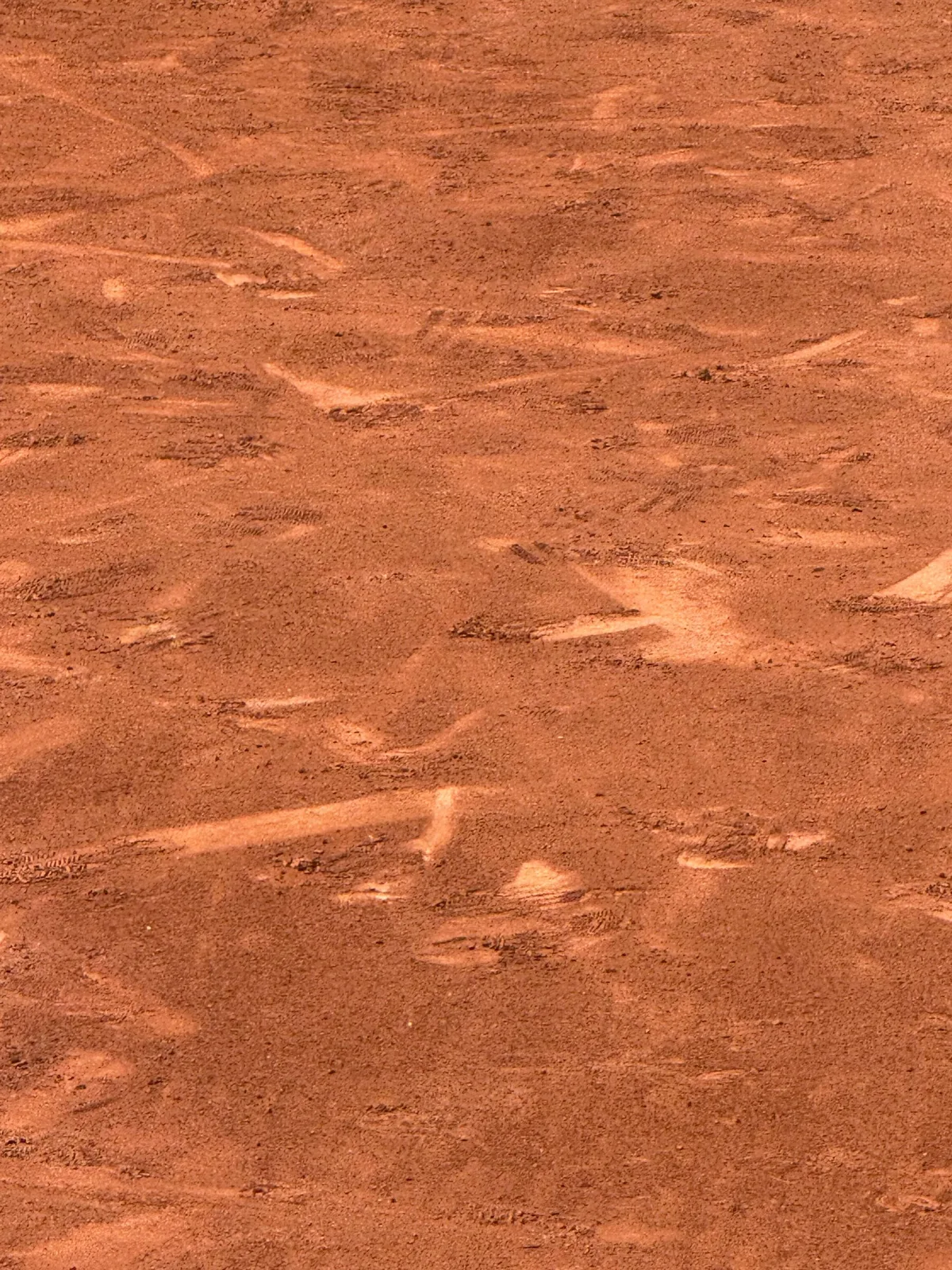
Clay is the slowest of the three main tennis surfaces. The ball bounces higher, the points are longer, and the player who tries to play the same tennis they play on a hard court rarely wins many of them. The hard-court game is built around taking time away from the opponent. The clay-court game is built around using the time you have to construct an answer.
What follows is the practical guide for a player who is about to play on clay for a tournament, a holiday, or simply because the local club has finally opened the courts for the season. None of this is technical re-engineering. It is the set of small adjustments that, taken together, make the difference between playing your worst tennis on clay and playing close to your best.
What actually changes on clay
Three things, all of them following from the surface itself.
The ball bounces higher. On a hard court, a normal-pace topspin forehand bounces at roughly waist height. On clay, the same shot bounces at chest or shoulder height. This means topspin works better and flat balls work worse, because flat balls sit up at exactly the height where the opponent can comfortably swing through them.
The ball loses pace. Clay absorbs the energy of the shot in a way that hard courts do not. The same swing produces a slower ball off the bounce. This rewards patience and punishes the player who is trying to end every point in three shots.
The surface allows sliding. A player can stop into the shot by sliding rather than planting, which means the recovery is faster and the angles you can reach are wider. This changes the geometry of the entire court. Balls that would have been winners on a hard court are merely good shots on clay because the opponent has slid into position to retrieve them.
The technical adjustments
Hit with more topspin. The single most useful change a flat hitter can make for clay. More topspin means the ball clears the net higher (safer), bounces higher (harder for the opponent), and stays in the court (the spin pulls it down). If you usually hit your forehand flat through the middle, brushing up on the ball more — even slightly — will produce a noticeably better result on clay than a 30 percent reduction in unforced errors will on a hard court.
Use the wider angles. Because the surface allows the opponent to recover further, the geometry rewards balls that pull them into the alleys. The short angle cross-court that would have been a winner on a hard court is no longer a winner on clay, but it is now a tool — it stretches the opponent across the court and sets up the next shot. Construction over knockout.
Re-learn the drop shot. Most amateur drop shots are ineffective on a hard court because the bounce keeps the ball alive long enough for the opponent to chase it down. On clay, the same drop shot dies in the front of the court. The surface absorbs it. Drop shots become a real weapon on clay; a player who has barely used one in a hard-court career will discover them halfway through their first clay match.
Stop trying to serve and volley. The slower ball off the surface gives the opponent extra time to set up the pass. Serve-and-volley as a primary tactic does not work on clay. Most touring pros abandon it almost entirely during the clay swing. The volley still has a place — but it is the volley you take after constructing a six-shot rally, not the volley you take on the second ball of every point.
How to move on clay
Movement is where the surface most rewards specific technique, and where most amateurs lose the most ground without knowing it.
The defining clay movement is the slide. To slide, you do not plant your feet but rather let them keep moving as your weight transfers into the shot. The outside foot (the left foot on a right-handed forehand) slides into the ground as you hit. The body weight is still moving toward the ball at contact, which means the slide must be controlled or the player loses balance entirely.
Learning to slide takes hours, not minutes, and most adult players never become fully comfortable with it. The good news is that you can get most of the benefit of clay movement without mastering the slide. Two simpler adjustments do most of the work.
Stand wider. Your base on every shot should be slightly wider than it is on a hard court. The wider stance gives you a chance to absorb the higher bounce and to load through your legs rather than reach with your arms.
Use bigger recovery steps. Because the surface gives, you can take longer strides without losing balance. This is more efficient than the small choppy steps that work on a hard court. Three big steps will get you across the court faster than six small ones on clay; the opposite is true on hard.
The tactical mindset shift
The most underestimated adjustment is mental. Clay tennis is patient tennis. The points are longer. The breaks are harder to come by. The match takes more time. A player whose mental rhythm is built around winning points in four shots will be playing on the wrong clock for the entire match.
Three specific shifts.
Expect rallies of six to ten shots minimum. If you are walking off the court after most points in three or four, you are either playing someone much weaker than you or you are missing too many balls. Clay rallies are constructed, not punched.
Value one break of serve. A break on clay is worth substantially more than a break on a hard court, because breaks are rarer and harder to defend. If you have broken at 3-3, you do not need a second one. Hold serve and you have the set.
Do not panic at 0-30. Service games on clay are looser than on hard courts because the return has more time to attack. 0-30 is uncomfortable but it is not the disaster it is on a fast surface. Win one good point and you are level on the game; the situation that felt dire is suddenly fine.
The physical reality
Clay matches are longer than hard-court matches at the same level. A two-hour hard-court match becomes a two-and-a-half-hour clay match for the same scoreline. The legs do more work. The lungs do more work. The fitness gap between players that does not show up on hard courts will show up on clay in the third set.
The specific things that fatigue on clay: the calves and Achilles (from the sliding stops), the lower back (from the higher contact point on the topspin shots), and the legs generally. A player who has not been on clay for a season should expect to be sore in places they had forgotten about, for two or three days after the first session back.
The implication for preparation: if you are about to play a clay tournament after a hard-court winter, get on clay at least two or three times in the fortnight before the event. The first session will feel slow and awkward. The third will feel almost normal.
The single thing most players get wrong
If you only change one thing about your tennis on clay, change the swing path on your forehand. Flat ball-strikers, who get away with it on a hard court because the ball stays low, get punished on clay because the ball sits up in the strike zone of every reasonable opponent. Brushing up on the ball — adding even 20 percent more topspin than your hard-court forehand carries — does more for your clay results than any tactical adjustment.
The rest of the changes above are real and matter, but the single technical lever is right there. Less flat, more spin. Everything else gets easier when that one thing is right.
Get a pro to look at your clay-court game specifically
The fastest way to find out which of these adjustments you most need is to film a clay-court session and have a touring pro watch it. Upload a clip at allcourt.club/intake and a pro from the All Court network will tell you which of the surface-specific patterns is costing you the most — the flat ball that sits up, the recovery footwork that costs you the wide angles, the impatience that gives the opponent the rally. Most players have one of the three as their dominant clay-court issue, and naming it correctly is half the work.
Clay is rewarding once you stop fighting it. The players who love it best are not the ones who hit hardest. They are the ones who have learned that the surface gives them a different set of tools, and learned which of those tools is worth picking up.
Related posts
Best tennis clubs in Paris: top spots to ace your game