How pros switch their game from grass to hard court
There is a specific four-week window every August when the entire professional tour recalibrates from grass to hard court. Most of the adjustments are not the ones a spectator would notice. Four touring pros on the All Court performance platform name the specific changes they make, and how to see the same reset play out at Flushing Meadows through the fortnight of the US Open.

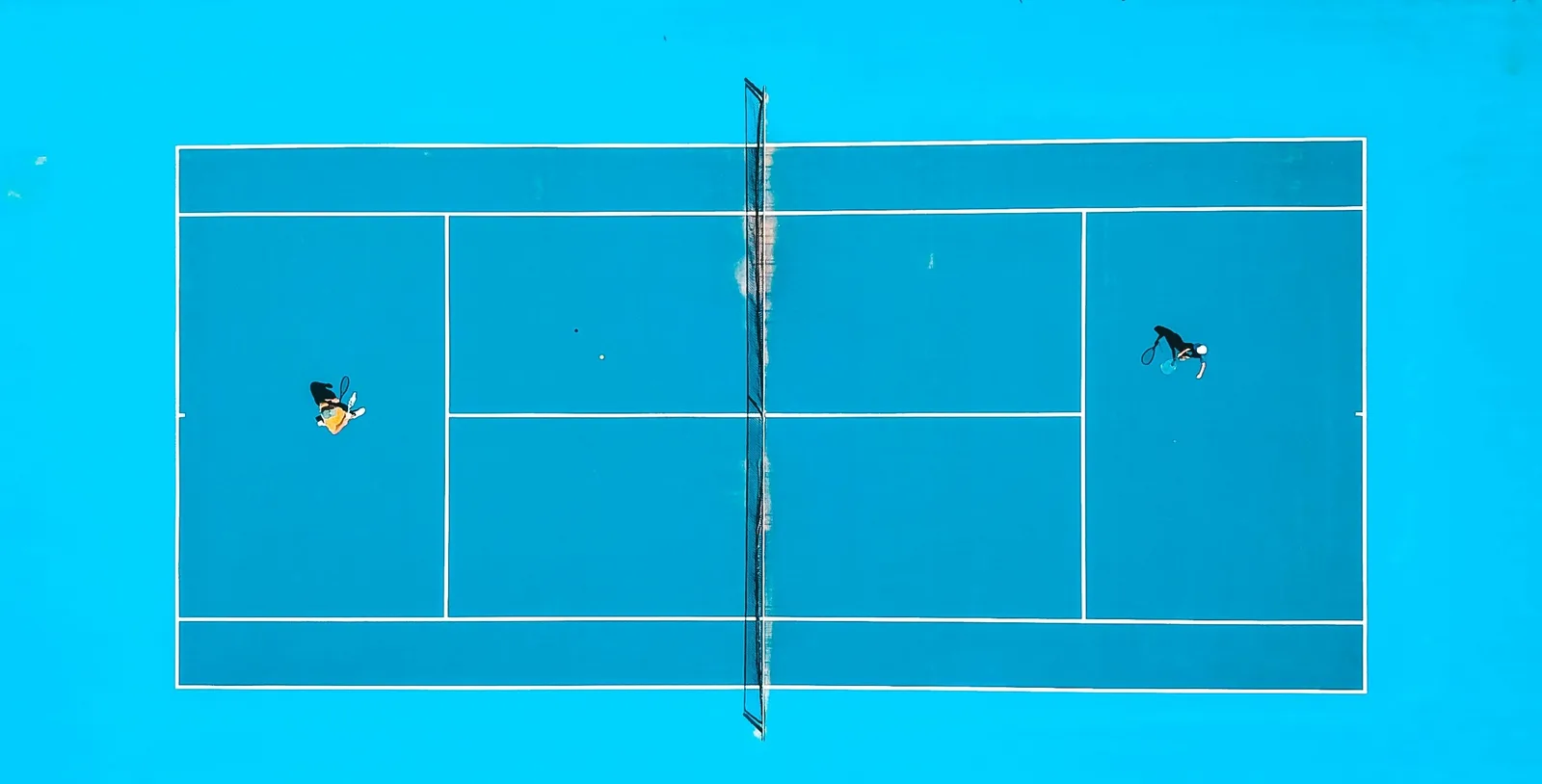
There is a specific month in the tennis calendar that gets less attention than it deserves. It is the four weeks between the end of Wimbledon and the start of the US Open. Most of the tour spends it not on court in front of cameras. They spend it on hard courts they have not touched properly since May, running through the specific adjustments that separate playing on grass from playing on hard court, and getting a game that has just spent six weeks calibrated for skid and short rallies ready for the higher bounce and longer rallies at Flushing Meadows.
The adjustments are the same ones any club player has to make when the summer grass leagues finish and the hard-court season starts. Most of them are not the ones a spectator would notice. This is what the professionals actually change, and why it matters at every level.
What the surface changes
Grass rewards the first-strike serve because the low bounce shortens the rally and gives the returner less time to construct anything back. Hard court has a higher bounce and a slower reaction off the surface, which means the returner has time, the rally is more extended, and net approaches are less lucrative than they were the week before. The footwork changes too, from the slide-heavy grass movement that lets the body sit low over the ball, to the more angular hard-court movement that asks the body to stand a fraction taller. The tactical calculation about when to end a point moves later in the rally.
Those are the broad differences. What matters, for a player running the transition, is which specific dials you turn and in what order. All Court asked four touring professionals from our pro-mentor network to name the one adjustment they make, the single thing that would surprise a club player if they knew about it. All four are pro mentors on the All Court performance platform. Lauryn John-Baptiste, WTA career-high No. 270 and a former British U18 national champion who reached All-America status in NCAA doubles at Arizona State. Alice Gillan, WTA career-high No. 466 and a decade on the WTA circuit, with two ITF titles in 2025 alone. Millen Hurrion, ATP career-high No. 542, who captained the University of Kentucky to their first-ever NCAA runner-up finish. Katy Dunne, WTA career-high No. 212 in singles and No. 135 in doubles, with nine ITF titles and a WTA main-draw debut at the 2014 Birmingham Classic she earned by beating the tenth and second seeds in qualifying. Their four answers together map the switch cleanly.
1. Shot shape
Lauryn points to shot shape as the first dial to turn. On grass she flattens the ball to keep it low, because a low ball on grass is a ball the opponent cannot get under. On hard court she switches to a heavier ball with more spin, so the ball pushes opponents back off the baseline instead of running through them. The change is not in how hard she is hitting it. It is in what the ball does after it lands.
The club-level version is the same instruction. A flat drive that dies on grass sits up on a hard court and gives an opponent an easy hip-height ball to attack. If a grass game has been about knifing the ball low, the first thing to relearn in August is that the same flat pattern gets punished on any surface where the ball actually bounces. Jannik Sinner will run exactly this adjustment over the next fortnight. His grass serve at Wimbledon was landing short and skidding through; on the DecoTurf at Flushing the same swing produces a ball that sits an inch higher and gives the returner meaningful time to load up on it. Whether the placement inches tighten enough on the August practice courts is what decides whether he defends his US Open title.
2. How points actually end
Alice names the dial that separates the two surfaces most obviously in a rally. On grass, a decent approach shot often buys an easy first volley, because the fast court and low bounce rush the opponent into a defensive reply. On hard court, that same approach shot much more often comes back at pace. The approach pattern that wins on Centre Court can be the pattern that loses on Ashe.
For anyone playing club tennis, this is probably the most useful single lesson of the four. Half of the "why is my game not working" conversations at any club through September come down to a player who is still trying to close the point at the net on approach shots that would have earned a weak reply on grass but are now getting driven past them. The volleys are not worse. The approach is just not quite good enough for hard courts. Aryna Sabalenka's Wimbledon fourth-round loss to Naomi Osaka in July looked, from the outside, like an anomaly for the world No. 1. From a tactical read it was a game that had spent a fortnight in the wrong register. The four weeks between now and Flushing are the window she has to sort it out.
3. Body posture
Millen talks about the physical set-up rather than the shots. On grass he plays with a wider base and a lower centre of gravity, because the ball skids and he cannot afford to be caught in a taller stance reaching down for it. Coming off grass and onto hard court, the move is to let the body come up again. Same swing, different posture.
This is the least visible of the four adjustments and the one most likely to quietly wreck a club player's game through August. The body remembers the grass-court posture. It stays low, it stays wide, it stays committed to reaching for balls that on a hard court are going to be knee-high or higher. The result is a player who feels stiffer, slower and heavier on court than they did in July, and cannot quite articulate why. A single session of split-step drills at neutral height, before the first real hard-court practice, will usually sort it.
4. Which patterns port and which do not
Katy answers from the tactical side. During grass season she adds mid-court slice returns and dropshots to disrupt opponents dug into base-pattern rallies. Some of those patterns keep working into the early August hard-court events, because opponents at that stage have not dialled themselves back into hard-court reads either. Others do not port at all, because on a slower, higher-bouncing surface the slice sits up and the dropshot has more time to be run down.
The instruction at any level is the same. The grass-court adjustments a player made in June are not the enemy in August. Some will transfer usefully into the first two weeks of hard-court tennis, when the field as a whole is still adjusting. Others will not. The player who assumes the whole game must be immediately re-written will lose the patterns worth keeping. The player who assumes the grass game can just be carried straight across will lose the first three rounds of the first three tournaments they enter.
Three numbers to watch at Flushing
All four pros describe the transition as a set of small decisions made in the two weeks before the first hard-court tournament, that a spectator will not notice but that the players will feel with every ball. If you want to watch the US Open through the same lens they will, three specific numbers make the reset visible at the top of the game.
The first is Sinner's first-serve-points-won percentage. His 2026 baseline is high, and on grass at Wimbledon he was closing sets out with it. If it holds above 80 per cent through his first three matches at Flushing, the reset has landed. If it drops into the low 70s or below, either the calibration has not adjusted or the DecoTurf is playing quicker than he prepared for.
The second is Sabalenka's double-fault count per match. Her career average is high for a player of her ranking, and under pressure at Wimbledon it climbed. If she can bring her total under 5 per match through the first four rounds, the reset is done and the defending champion is defending properly. Above 7 per match and expect the tightness to leak into the rounds where the matches turn.
The third is the shared one: break-point conversion. Both players win most of their matches by holding serve and taking one break per set. If either is converting break points above 40 per cent by the second week, they are in position to defend the title. Below 30 per cent, it's the opponent's match to take.
What to do with the observation
The touring pros All Court works with watch matches this way. Not for the score, but for the specific number that reveals whether a player has calibrated their game for the surface they are on, and the specific pattern that reveals whether they have not. If you would like a touring professional to read your own tennis with the same specificity, in the same window between the end of your summer season and the start of the autumn one, the All Court waitlist is the way in. There is no nominator, no joining fee, and no waitlist that closes inside a generation. Join the waitlist at allcourt.club/join, and when your batch opens a touring pro watches your session back, tags every shot, and names the specific number that is quietly deciding your matches.
Related posts
Where to play tennis in New York before the US Open