Where to play tennis in New York before the US Open
New York goes tennis-shaped for two weeks in September, but we think that the best question is not where to watch but where to play. There are over five hundred public tennis courts in this city and one $100 permit that gets you onto any of them. Here is the map, the ritual, and the one buried treasure most out-of-town visitors will not know about.

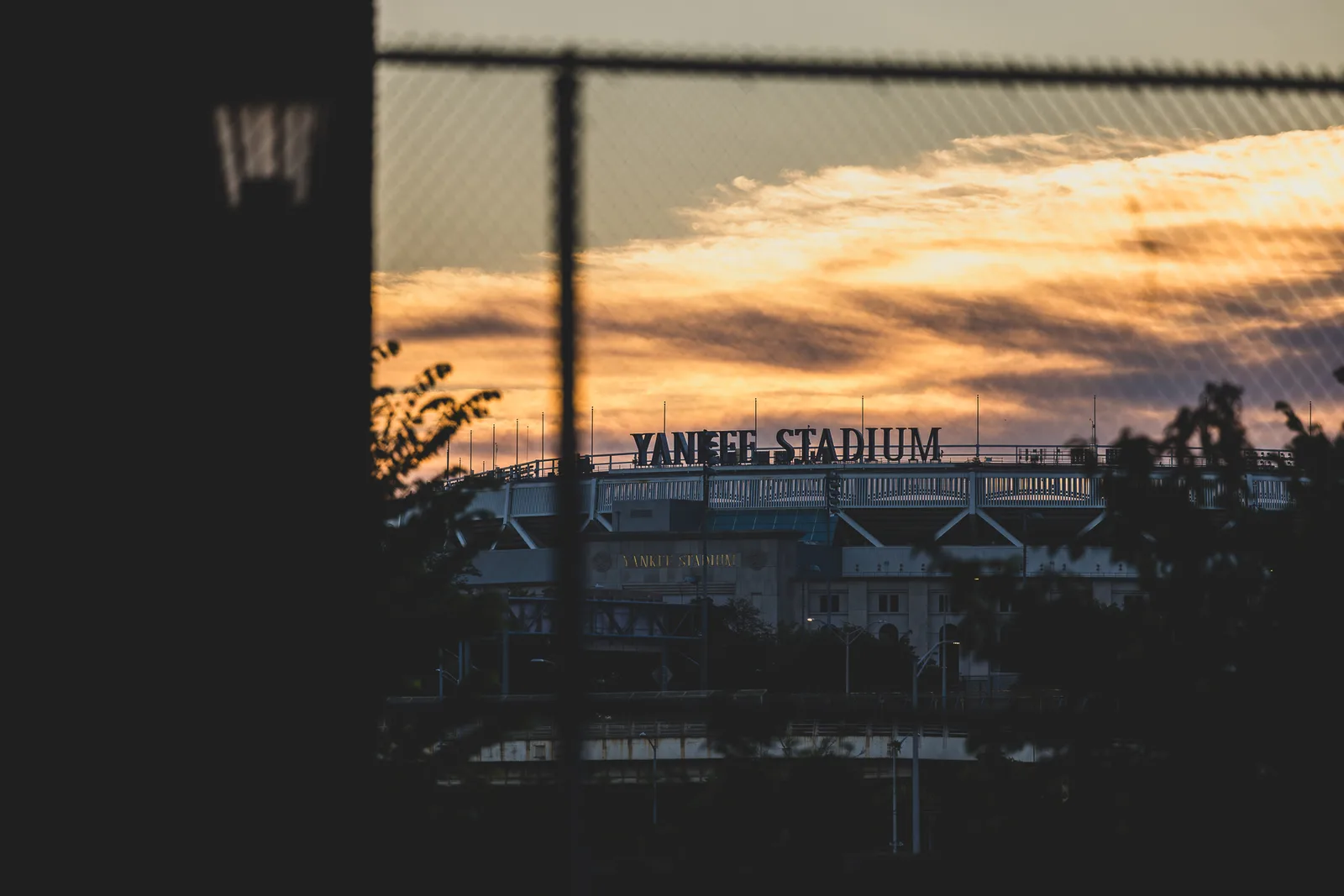
Every year at the end of August, New York decides for two weeks that it is a tennis city. The Long Island Rail Road runs extra trains to Flushing Meadows. Half the private jets at Teterboro have players on them. The delis around midtown start selling green-glass Grey Goose bottles by the case to the corporate hospitality boxes. And somewhere between fifty thousand and half a million New Yorkers who have not swung a racket since last September decide that this is the year they are finally going to take tennis seriously.
→ Where to Play Tennis in New York, 32 public courts across 5 boroughs
The US Open runs from the 30th of August to the 13th of September at the USTA Billie Jean King National Tennis Center in Flushing Meadows. For the fortnight of the tournament the questions are all about seats, weather, and whether the roof on Arthur Ashe is open. For the rest of the season, and for anyone who thinks about tennis in this city for more than two weeks a year, the question changes. It is not where to watch. It is where, in a city of eight and a half million people, you can actually get on a court.
The clubs you have heard of, briefly
There is a private members' club architecture in Manhattan, as there is in any old city. The Racquet Tennis Club at 370 Park Avenue has been men-only since it opened in 1918 in a McKim, Mead and White building designed for the specific purpose, and shows no signs of changing that policy in the middle of a century that has changed almost everything else about it. The River Club, established in 1931 in the art deco tower above the East River at 52nd Street, has two tennis courts inside a clubhouse whose 1932 membership rolls read like the guest list at Newport: Astors, Roosevelts, Vanderbilts, Rockefellers, Morgans, Pulitzers, du Ponts. The New York Athletic Club will charge you an $8,500 initiation fee and around $3,000 a year for the privilege, and once you are inside, most of the racket sport on offer is platform tennis rather than the version played at Flushing Meadows.
These clubs are old, storied, and, if you can get inside one, the tennis is genuinely excellent. None of them are why New York plays tennis, and none of them are what this piece is about.
The permit, the sheet, the hustle
New York plays tennis on public courts, and it plays it in a specific way that anyone who has walked past Fort Greene Park at six thirty in the morning has already learnt. There is a sign-up sheet on the fence. The regulars have their own markers. They know the unwritten rules, which include one hour for singles and two for doubles and a certain amount of tolerance for the visitor who does not, until the third or fourth time it happens.
The gateway to any of it is the permit. A hundred dollars buys you the full April-to-November season on any public court in the city. Seniors pay twenty. Children pay ten. If you are only in town for a week and only want to hit once, a single-play ticket is $15 and good for an hour at any court. The permit itself is a sticker. You put it on your racket. If it is not there, you do not play, and the regulars will notice before the parks officers do.
The system has been quietly modernising. A handful of the busiest courts have moved onto online reservations through third-party services like CourtRes, and you can now book a court up to seven days in advance at Central Park, McCarren in Williamsburg, and Riverside on the Upper West Side. For most of the city, though, the sheet on the fence is still the reservation system, and the code is still the code.
The map
New York has more public tennis courts than any city in America. There are over five hundred of them across the five boroughs. Central Park has thirty. Crotona Park in the Bronx has twenty-two. Riverside Park on the Upper West Side has ten red-clay courts that are the only outdoor public red clay anywhere in New York City. The Prospect Park courts in Brooklyn get a bubble from October to April, which turns a seasonal game into a year-round one for anyone willing to make the trip past Grand Army Plaza in the cold.
We have put together a guide of thirty-two of them, chosen across the five boroughs for the ones actually worth going out of your way for, with addresses, surface notes and booking links, plus a personal coffee-and-drink pick for each borough. → Where to Play Tennis in New York, 32 public courts across 5 boroughs. The sister guide, for anyone who found this one because they had the same problem in London during Wimbledon, is at the same address, one city over.
The Jungle
Not every court in New York is only an address. The Frederick Johnson Playground, in Harlem, a short ride on the 3 train from central Manhattan to its last stop at 148th Street and Lenox Terminal, is known to the players who use it as "The Jungle," and has been for as long as anyone remembers. The name is a private-club joke that stuck. There was once a members' facility nearby whose clay courts would stay wet longer than the public asphalt after a rainstorm, and the members would say "let's go down to the asphalt jungle" to mean the public courts. The private club is long gone. The public courts are still there.
In 1971 the playground was officially dedicated to Frederick Johnson, a one-armed Harlem teaching pro who discovered a young Althea Gibson roaming the streets of the neighbourhood and put a racket in her hand. She went on to become the first Black player to win a Grand Slam, taking the French Championships in 1956, then Wimbledon and the US Nationals back to back in 1957 and 1958, at a time when many of the American clubs where the tour played would not have admitted her coach. In the same year the playground took her coach's name, 1971, Gibson was inducted into the International Tennis Hall of Fame. The Jungle is on the court list in the guide and a reason to go is the story, which we feel is so interesting that All Court is producing a documentary about it, called, funnily enough, The Jungle.
The buried treasure
The single detail most out-of-town visitors do not know about New York public tennis is that the venue for the US Open is, for the other fifty weeks of the year, a public tennis facility. The USTA Billie Jean King National Tennis Center in Flushing Meadows has forty-five courts, the largest public tennis facility in the world, home of the US Open and open to the rest of us the other eleven months of the year. During the tournament fortnight it is where Sinner and Sabalenka play. During the rest of the calendar year, it is where anyone with a booking on ntc.usta.com plays. You cannot get onto Arthur Ashe. You can get onto a court at the same complex, hit balls in the general direction of the same skyline the pros hit into, and leave through the same gate.
The US Open runs for a fortnight. Public bookings pause for the tournament and the weeks either side of it while the temporary infrastructure goes up and comes down. From October onwards the courts are back to the public, and that is the window to book if the point of the trip is to have played on the same complex the tournament ran on.
The most New York court of them all
Pier 40, on the Hudson River at West Houston, has three hard courts that are open from six in the morning until one at night. There is no permit required and there is no sign-up sheet. It is first come, first served, and it is free. In a city that puts a price and a process on almost everything it lets you do, three free courts on the water may be the most New York thing about tennis in this city.
The other one worth knowing, if only because it is a good line at a dinner, is that there is a single tennis court on the fourth floor of Grand Central Terminal. The Vanderbilt Tennis Club runs it. Anyone can book it, up to a week in advance. Hourly court time runs from $95 for a slot between eleven at night and two in the morning to $335 at the busier hours of the day. But it is a tennis court on the fourth floor of one of the busiest railway stations in the world, and the fact that it is there at all is the sort of thing New York throws in for texture.
What to do with the session
Film a session at any of the thirty-two courts in the guide. A phone behind the baseline is enough. There is no permit needed, no six-thirty sign-up sheet, no October bubble going up and April bubble coming down. Join the waitlist at allcourt.club/join, and when your batch opens a touring professional watches the video back, tags every shot, and tells you what your game actually did in the hour you were on court. The guide tells you where to play. All Court tells you what happened while you were playing.
Related posts
Where to play tennis in London during Wimbledon