What touring pros see in your tennis: ten cues from a hundred reviews
We went through a hundred reviews from our touring pros this September. Here are the ten cues that keep coming back, and what the ATP and WTA coaches on the same tour are working on with the same faults.

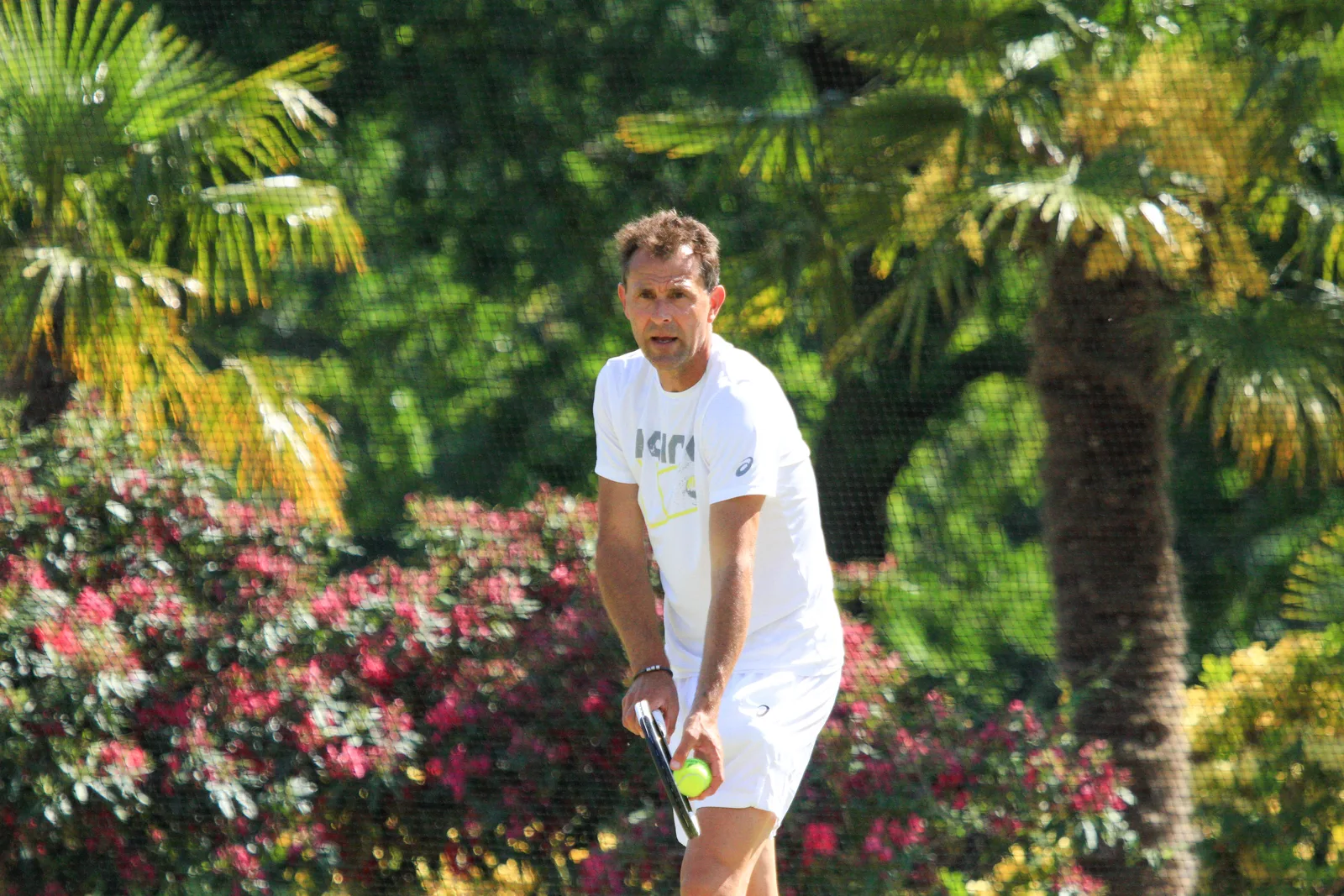
Spend a couple of days watching and listening to our touring pros reviewing the clips our community has sent in this season, and a rhythm starts to form. A player has uploaded a clip from their court that morning. On the screen, one of our touring pros on the ATP or WTA tour has recorded a talking-head video over the top of it, pausing the footage at the moment of contact, replaying a serve in slow motion, showing where the toss can improve. Ninety seconds in, they have already given the player something to practise.
We go back through the reviews for training and educational purposes, always trying to raise the quality of the read our community gets. A player puts their phone on the back fence at their local club and records their tennis. Within hours one of the touring pros, "sitting in their box" comes back to them with a read on their game. Listening to the reviews together is how we keep raising the standard as the community grows.
This week we sat down with the set from this month, around a hundred sessions, reviewed on the platform by our pros watching amateurs of every level. We wanted to know whether the same faults kept coming up, whether the same cues kept coming back, and whether what our pros see in a club player’s footage looks anything like what the ATP and WTA coaches on the same tour are working on with their own charges.
The split step Federer never missed
Millen Hurrion, reviewing Daniel this summer, made the point about the movement before the shot. “It looks like you’re just landing a little bit late when the ball is already coming towards you,” he said, playing back Daniel’s return-of-serve. “I want you to be landing basically when the opponent is making contact with the ball.” He pegged the cue to Federer. “The best tennis players are the best movers, and everything starts from the split step and your first step out of it.”
Federer’s split step is coaching lore. Watch him from his best years and the split step landing is on the opponent’s contact almost every single point. Severin Lüthi and, later, Ivan Ljubičić were the coaching team that kept it that way through the second half of his career. It is why he seemed to have time when nobody else did.
At the club level the timing of the split is the difference between reading the ball early and reading it late. If the landing comes after the opponent’s contact, everything downstream (the read, the first step, the racket preparation) runs a fraction behind.
Back before the bounce
The most common note across the reviews was that the racket is late. Lauryn made the point three different ways in three minutes to Oberoi. “You take the racket back as it’s bounced and the ball’s coming to you,” she said. “We want to turn the shoulders, create space with the elbow and the body, and then have a longer swing path.” Alice Gillan, watching a different player on a different day, said essentially the same thing. “You’re still taking your racket back and it’s almost bounced, and that’s where you can kind of struggle a little bit.” The cue in both reviews is the same. The racket should be back by the time the ball has crossed the net.
Rafael Nadal has been coached his entire career on this point, first by his uncle Toni and then, from 2016, by Carlos Moyá. It is why the forehand looks the way it does even in his forties. The shoulder/unit turn taking the racket back happens before the ball has bounced. Everything after that is body, not just arm.
Preparation also has a spatial half. Sasha, illustrating with her own shadow swing while watching her player's clip: “you want about one fist of space between your elbow and your body.” She is talking about a fault where the arm stays glued to the torso through the swing, which limits the contact point and the depth. Lauryn makes the same observation on a one-handed backhand: “extend that arm out as far as possible, and this would help improve your depth.” Millen catches the same fault on Karen’s forehand and offers a felt cue: “your non-dominant left arm is kind of like a guide or a target as to where you want to make contact with the ball.” The non-dominant hand tells the body where the ball is going to be.
The boxer pulling his punches
“What you do here is kind of like a boxer who is constantly pulling back his punches,” Mihai told a player this summer, watching a forehand play back on the tablet. “As you hit the ball, look, you can see you really are trying to compensate here with your back. You’re arching a lot and I’m sure if your back doesn’t hurt now it is gonna hurt in the future.” His cue: on the forehand, the step forward is with the left foot; on the backhand, with the right. Note that all these clips were of right-handers! Dan Little offers the same diagnosis for Raphael, in gentler language. “At the moment you’re not quite going into the court when you hit the backhands, you’re kind of hitting the shot and then moving sideways to recover.” Given on another: “step down the court instead of stepping backwards.”
The Alcaraz forehand is the counter-image at the top of the sport. Everything from the hips down is committed forwards by the time the racket comes through. Juan Carlos Ferrero drilled that into him across the seven years they worked together, from 2018 through 2025.
The related fault is grip pressure. Millen’s cue for a player whose backhand had stiffened up: “the power comes from the looseness in the wrist. So I want you to think about holding the grip at maybe a three out of ten in terms of firmness, as opposed to maybe a six or a seven.” Sasha, inside a backhand teardown of her own: “requires relaxing the wrist slightly.” Simone Vagnozzi and Darren Cahill have been working on that same point with Jannik Sinner since 2022. At six or seven the swing gets muscled and the racket-head speed drops. At three the swing loosens and the racket-head speed rises.
Above the shoulder, not below the knee
Katy to another player, Octavius, on his backhand: “your racket is finishing below your knees. So this is a problem if you want to get good depth, good height on the ball. When your follow-through comes down it brings the ball down with it.” Her drill: start in the service box, cross-court with a partner, brush up under the ball, finish with the racket head over the shoulder with the goal of dropping it inside the service box of the practicing partner. Do it there before you go back to the baseline. The forehand version is the same. “Follow through over your left shoulder. This will just help you control the ball a bit more.”
Dan Little on the backhand rotation. “Can you bring your left leg all the way round so that it finishes in front of your right leg?” he asks the player he is reviewing. “What that means is that your left hip will get involved, it will turn, you’ll be fully rotating into the direction that you want the ball to go into.” The mechanical effect he describes: the head stays over the ball, the hip drives naturally through, and the recovery back to the middle becomes one push off the left leg rather than an uncoil.
Then there is the shape of the swing itself. Lauryn on net clearance and topspin: “think about what kind of height you want over the net. Try aiming for a metre or two over. You might think, but if I hit it that high, it’s going to fly out. Correct, but that’s why we hit with topspin.” Katy Dunne says the same thing in more physical language to Simon: “lift up with the initial movement of the backswing to then allow for the racket head to drop naturally down under the ball to kind of create that circle that you see most of the pros doing.” Millen makes the point again for Daniel, whose errors are all in the net: “do not be afraid to exaggerate that margin in that shape over the net, especially on the backhand side.”
At the WTA level, the same shape is what Gavin MacMillan has been working on with Coco Gauff since she brought him in after the 2025 French Open. MacMillan, a biomechanist who rebuilt Aryna Sabalenka’s serve, has said the forehand focus is on “shape and keep the shot heavy and deep with spin”. The results are already showing at 2026 tournaments like Cincinnati.
One, two, three on the serve
Lauryn on serve rhythm, to a player she was reviewing: “if it helps you, you could focus on a one, two, three count. So you’re literally counting from releasing the ball. One, two, three. Three would be where you’re hitting contact. Two would be when you’re in that trophy position just before you’re about to extend to hit the ball. And one is just basically at the start where you’re rocking back and throwing the ball.” Katy Dunne, on ball-toss placement, twice in the reviews: “your ball toss is very far in front. Try bringing it a little bit more above your head so that you can hold that trophy position longer.” Alice Gillan on the toss going too low: “you could throw it a little bit higher. And that will promote a better leg drive.”
At the tour level, the toss is where the serve holds up. Federer’s was famously consistent to within a small area for the whole of his career. Serena Williams’s toss was cited by her coaching team for two decades as the anchor of a second serve that held under Grand Slam pressure. Almost every serve fault Lauryn, Katy and Alice noted in the reviews resolved to the same thing: the body weight is going somewhere other than up and into the court. The tour version of the fix is the count. One (release), two (trophy), three (contact). Nothing else in between.
A pro on your game, not on YouTube
Most of the cues above will sound familiar. Every serious amateur has been told to prepare earlier, to step into the ball, to hold the trophy position. What comes out of listening to touring pros arrive at the same short list, reviewing amateurs they have never met, is that this short list is what holds recreational tennis back. Sasha’s fist of space between elbow and body, Dan’s back leg all the way round, Millen’s grip at three out of ten, Lauryn’s one-two-three on the serve. Each is a cue you can walk onto a court and check.
We wrote last week about the coaching reset Alexander Zverev made at 28, the one that took him from six losing Slam finals to two won in a calendar year. We wrote earlier about when to change your tennis coach and how to find a coach who is right for your level. The argument in all of them is the same. At every level of the sport, the pros watch themselves back on video with expert eyes on it. It is how they iterate and how they get better. All Court reviews give the amateur player the same access. A touring pro watches your footage and tells you what your forehand, backhand or serve is doing, then gives you the specific cue for the specific fault. It is a pro reviewing your game, not a coach on YouTube demonstrating theirs, and not a video of another player’s swing you have to guess your way into copying.
Put your phone on the back fence and record some of your tennis. Within a day one of the pros in your box, hand-picked from the tour, comes back to you with a read on your tennis. Keep doing it. A coaching team of touring pros, in your pocket.
Katy, at the end of a review of a player she has never met, signs off with the line that sits under most of the reviews in the archive. “Let me know how that goes and come back to me with the improvements or if you’re struggling with something that you want some more advice on.” In that line, a fresh set of eyes turns into a pro mentor.