Doubles positioning: where you should actually be standing
The gap between passable vs. very good doubles is not the volley, the overhead or the serve. It is where the two players are standing and when they move. Fix that, and the rest of the game becomes twice as easy.


Watch a set of club doubles and count how many points end because someone missed a shot, then count how many end because someone was in the wrong place. The second number is bigger. It is almost always bigger. The received wisdom that doubles is won at the net is only half the story; the other half is that doubles is lost by the player who was not at the net when the point turned, or was too far from it, or was covering the wrong lane. Position is the layer underneath the skills, and it is the layer that stops improving as soon as players decide the way they were taught in a group clinic ten years ago is close enough.
Some of the sharpest thinking on doubles positioning has come from Martina Navratilova, whose 177 career doubles titles and 31 Grand Slam women's doubles crowns still stand as records no other player has come near. Her framework, laid out in her instructional work with Fuzzy Yellow Balls and in the Doubles Playbook series she co-produced with the Bryan Brothers and Gigi Fernandez, treats position not as a static box you stand in but as a live read on the ball that unlocks or forecloses the next shot. The framework below draws on that thinking.
This piece is the layer for the club player who has been playing doubles for a while, has decent hands and a working volley, and is losing sets because their court coverage is thirty per cent worse than the team on the other side of the net. It covers the four base positions, the two movement rules underneath them, the way the service game reshapes everything, the situations that call for breaking the base rules, and the three positioning errors that show up in almost every 3.5-to-4.0 match.
The four positions and what each is actually for
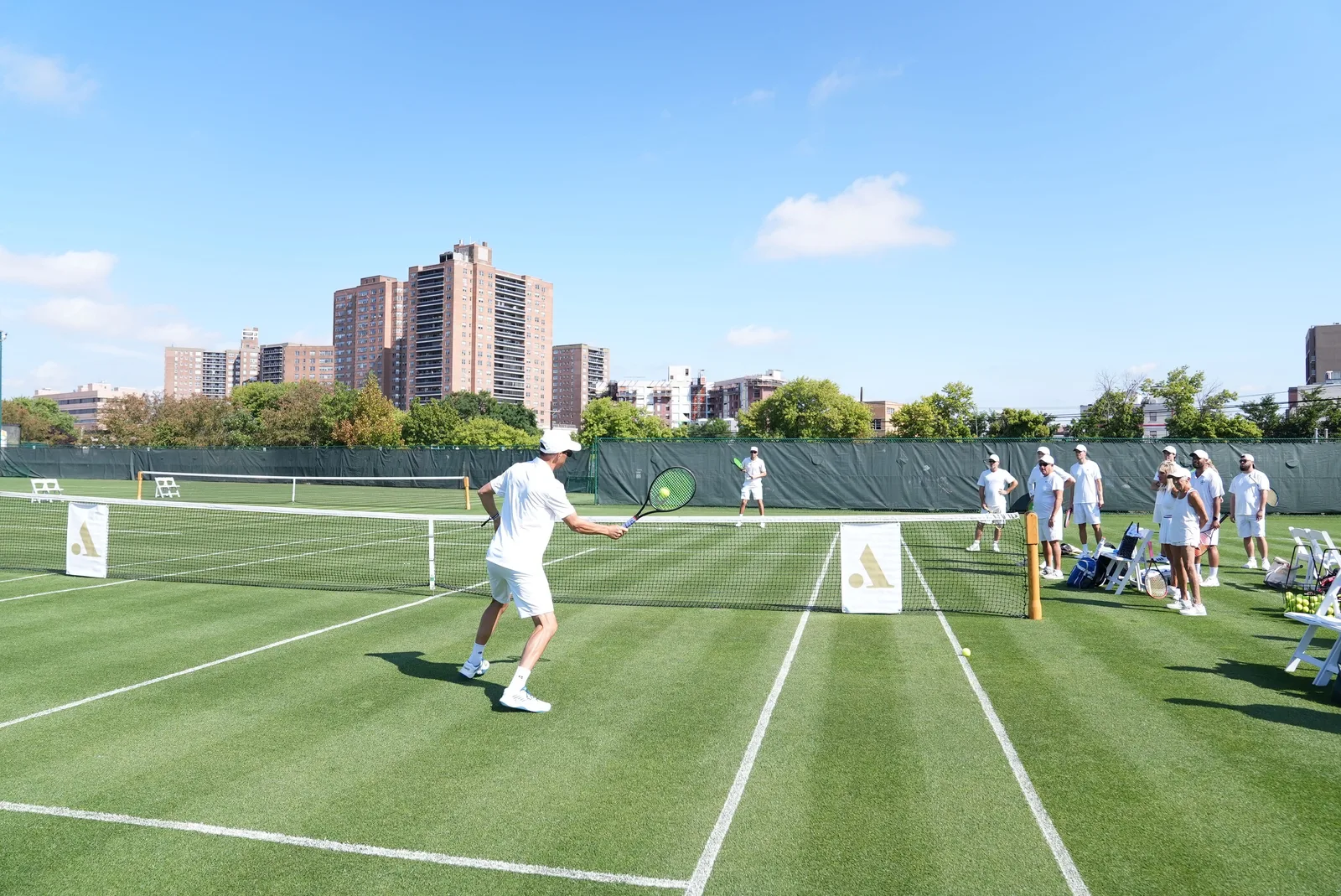
Doubles has exactly four base formations, including the Australian formation covered in a dedicated companion piece. Every point starts in one of them and progresses through one or more of the others. Naming them properly matters because most club players do not distinguish between them and end up defaulting to whichever one they happen to be standing in.
Two back. Both players roughly on the baseline. This is the returning team's default in many club doubles, and it is a defensive formation. It buys time and it gives the returner room to work, but it hands the net to the serving team, which means the serving team's next ball, if it lands anywhere sensible, is the end of the point.
One up, one back (server's side). The server is behind the baseline, (where they start the serve of course), their partner is at the net in the service-box , ideally in the middle of the box to allow coverage for a cross court return or a down -the-line return into the tramline. This is the serving team's most common starting position. The partner at the net is not decorative. They are the entire reason the serving team wins service games at any rate above 50/50. They cover the middle, they poach when they can, and they force the returner to hit into a smaller cross-court window than they would like or make a great passing shot down the line which, if it happens too often, may mean you edge your position closer to the tramline.
One up, one back (returning side). After the return, the returner comes in to about the service line while their partner stays back. This is a mid-point formation, unstable, and the team should either get both up or both back within the next shot. Sitting in it is a losing choice.
Two up. Both players inside the service line, ideally three to four feet from the net. This is the winning formation. Every doubles point the serving team wins on their serve is a point in which they got to two-up before the returning team did, or in which the returning team never managed to. This is the mountain both teams are trying to climb.
The base rule is straightforward: get to two up. Stay at two up. Do not concede two up unless the opponent hits a genuinely great shot that forces you back. Almost every doubles error at 3.5 and 4.0 traces back to a failure of this rule.
The two movement rules that hold everything together
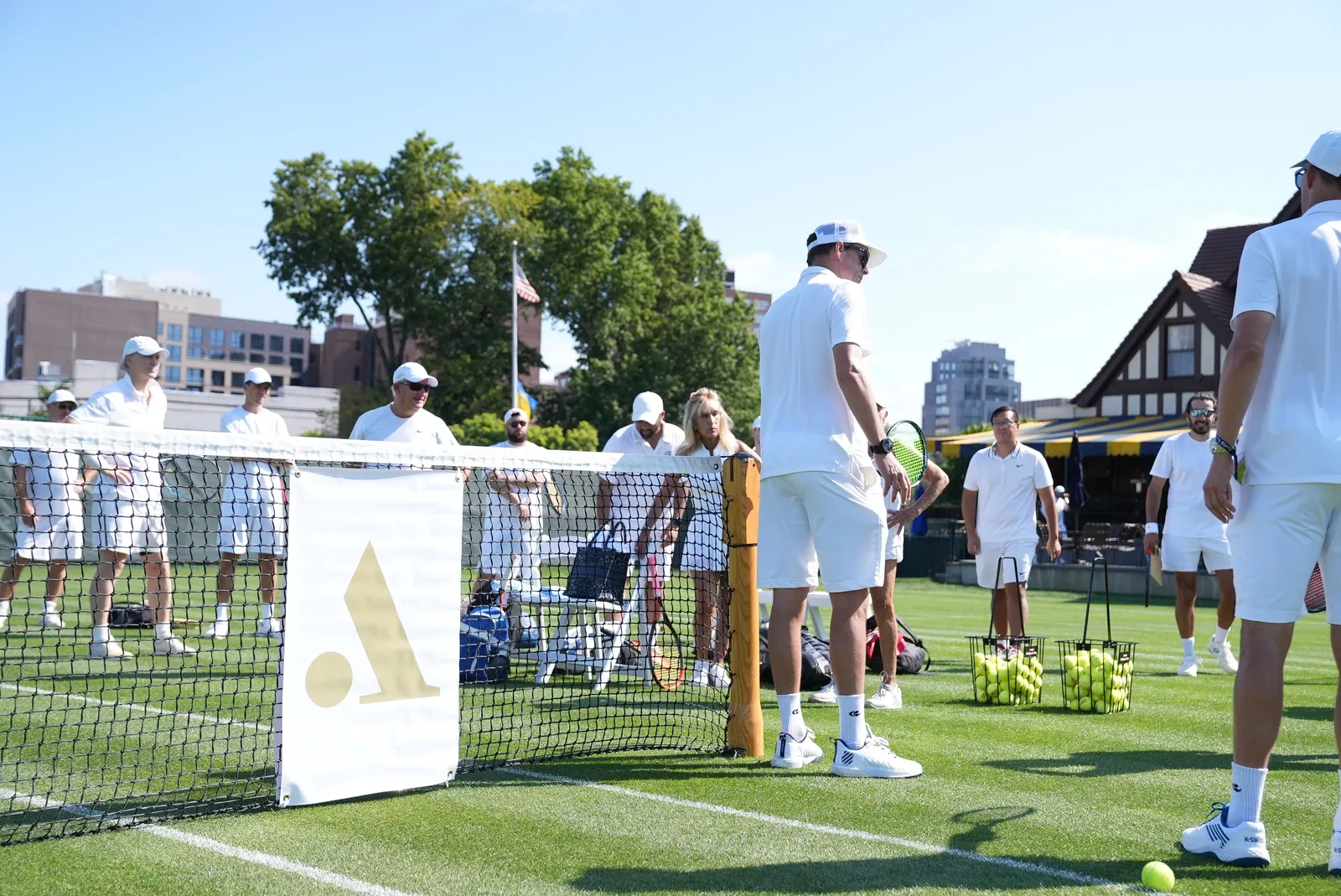
Two rules govern how a doubles team moves. Both are simple. Both are broken constantly at club level.
You and your partner move together, always. The two of you are joined by an invisible six-foot rope. If you move forward, your partner moves forward. If you move back, your partner moves back. If you move left, your partner moves left. If one of you covers the ball and the other stays put, there is now a court-wide gap between you and the opposing team hits into it. The imaginary rope is not optional.
Move with the ball, not with the player. Position is dictated by the quality of the ball that has just been struck, not by where the opposing net player happens to be standing. There is one question to ask every time the ball is hit: was that ball offensive or defensive? An offensive ball your team has just hit, deep and low with pace, means you and your partner move forward together and take the net, because the opponent's next shot has only a small, hard to make window to get through two players at the net. A defensive ball your team has just hit, short or floating or high, means you and your partner retreat together and prepare to defend, because that ball is coming back with force.
These two rules together create the base movement pattern of good doubles: two players glued to each other, moving as one unit, reading the ball into the position that best covers the highest-probability next shot.
The service game reshapes everything
Server's partner at the net. They stand halfway between the singles tramline and the centre service mark, at about the middle of the service box, three to four feet from the net. Not on the tramline. Not on the T. In the middle. Their job is threefold: cover any return down the middle, force the returner to guess where they will move, and poach when the ball is a floating cross-court return they can put away. The single biggest tell of a weak doubles team at club level is a server's partner who stands on the tramline and never moves. They are giving away the entire middle. See our companion piece on the Bryan Brothers' volley drill for doubles for the practice that builds this into your net game.
Returner's partner at the service line. They stand on the service line, with one foot near or on the T-line of the service box , ready to move forward or back depending on the quality if the return and neither glued to the net nor stranded at the baseline (or worse in "no man's land" between the service line and the baseline). Their job is to read the return their partner just hit and move accordingly. If it was a strong deep return, they step in and cover. If it was a floater their partner mishit, they step back and prepare to counter the opposing net player's put-away. This position is the one 3.5 players get most wrong: they either stand at the net and get lobbed, or stand at the baseline and gift the net entirely.
When to break the base rules
Two formations exist specifically to disrupt the base pattern, and both are worth having in the toolbox.
The I formation. The server's partner crouches on the T instead of standing to one side. As the serve is struck, they break either left or right, and the server covers the opposite side (you and your team mate have worked out which beforehand)! This is the doubles equivalent of an offensive move to a returner who has grooved a cross-court return. It removes the returner's known target and forces them to guess. Use it when the opposing returner is blasting the same cross-court return winners three times in a row.
The Australian formation. The server's partner stands on the same side of the court as the server, so both players are on one half. The returner is forced to hit down the line or up the middle rather than cross-court. Use it against a returner whose cross-court is a weapon and whose down-the-line is not.
Poaching. The server's partner reads a floating cross-court return early, breaks across the court, and cuts it off at the middle, or sometimes on the server's side, for a volley winner. Poaching windows open when the return is a floater, when it lands in your side of the court, and when the returner has committed to their swing before you move. Navratilova has said her favourite poaching moment came in the ad court after her partner hit a body serve and the returner slid to the middle to hit a backhand (Fuzzy Yellow Balls, 2025), from that instant the returner is almost committed to cross-court, because the down-the-line window is too tight for most club-level players to find under pressure. Once a game per hold is a good rate for poaching; once a set at the very least.
The three errors that lose most 3.5-to-4.0 matches
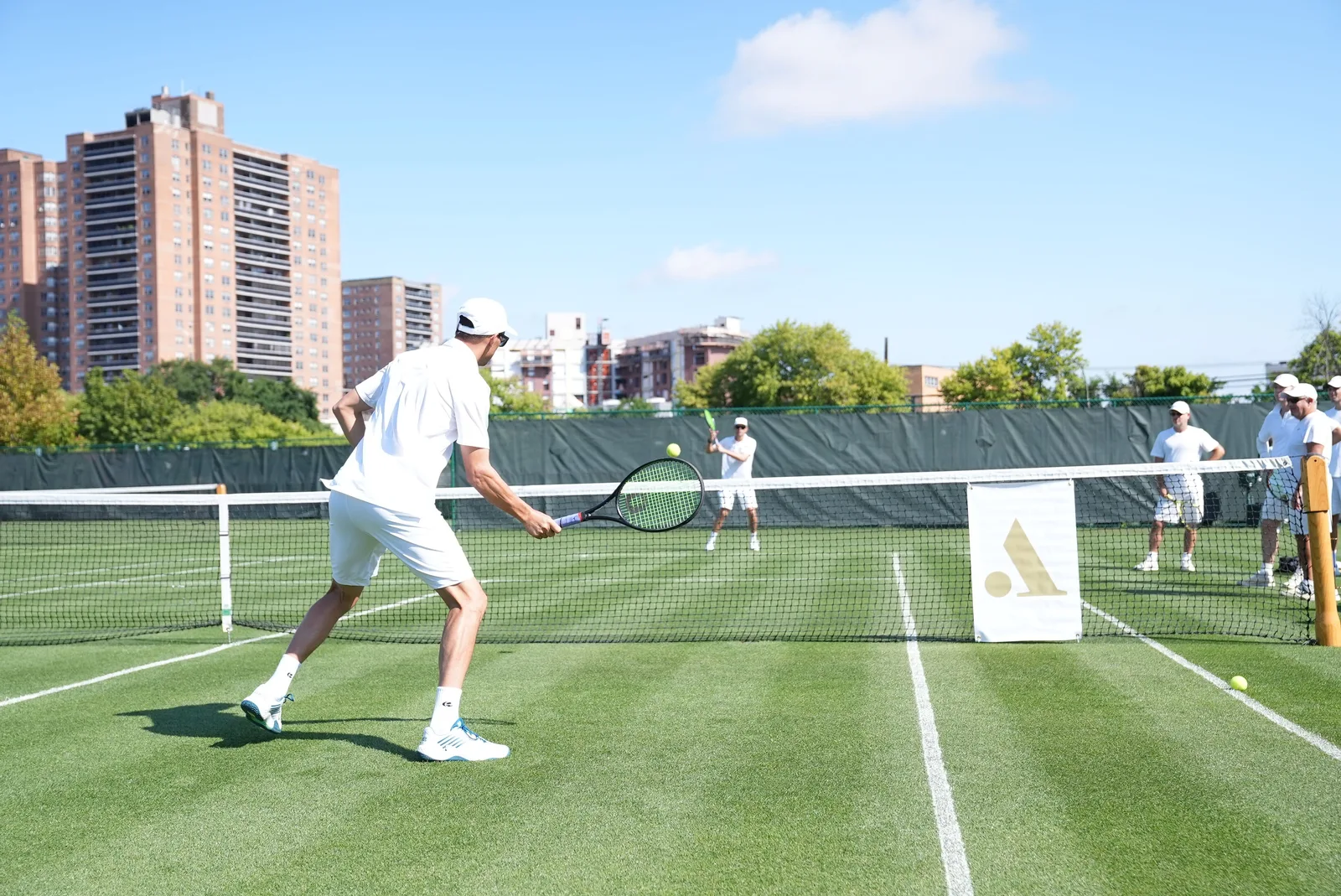
Almost every avoidable club-doubles point traces back to one of three positioning errors. Fix these before working on any of the shots.
Standing on the T (server's partner). The player who cannot decide whether they are covering the middle or the alley ends up covering neither. Pick a lane. The middle is the correct lane for the server's partner in every default pattern.
Ball-watching instead of position-watching. The player whose eyes track the ball but whose feet do not move is losing points to court coverage they never attempted. The eyes and the feet are meant to be doing the same job. If the ball crosses the net toward the opposite corner, your feet should already be moving in the mirroring direction. A lot of club players watch the ball float past them and watch their partner hit their shot and watch the ball back over the net, like a spectator would. The trick is not to watch the ball when it's past you but instead to keep your eyes on the opponent players to see their reaction as it will tell you where the next ball is coming.
Not moving with the partner. The two-player unit that stops being a unit is a team getting picked apart down the middle. If your partner steps in, you step in. If your partner steps back, you step back. The invisible six-foot rope is the whole game.
Get a properly rated read on your own doubles
If you would like a properly rated read on your own doubles positioning before you commit to changing anything about how you move on court, All Court exists for exactly that. You put your phone against the back fence, film a set with your regular partner, and upload it. You get a "talking head" session inside your own video from a touring professional. Plus the AI-enabled platform compares those ratings against thousands of shots from hundreds of players graded by the same touring pros and elite coaches. The output is a personalised coaching session on your footage and an All Court Rating for each shot you hit and a cumulative All Court Rating that compounds every time you film more of your play, so that you can see which parts of your doubles are improving and which movements and positions your court coverage is still leaking. There is no nominator, no joining fee, and no waitlist that closes inside a generation. Join the waitlist at allcourt.club/join.
What to work on next week
Pick one doubles match this week and think about two things: how many points ended with your team at two up at the net, and how many points ended with the opposing team at two up. Then think about how often, when your partner moved, you moved with them. Those two numbers will indicate whether your doubles pairing needs to work first on moving more aggressively toward the net, or fix the "invisible rope " problem.
Related posts
How pros switch their game from grass to hard court