Coco Gauff and the US Open her rebuild was designed for
Coco Gauff arrives at Flushing on the 30th of August three years removed from the last time she held the US Open trophy, one Wimbledon semi-final into a rebuilt serve, and inside the exact window her own camp has said the technical overhaul should start producing results. This is how she got here, and what the numbers say about whether the serve overhaul can drop on the hard courts of Flushing Meadows in 2026.

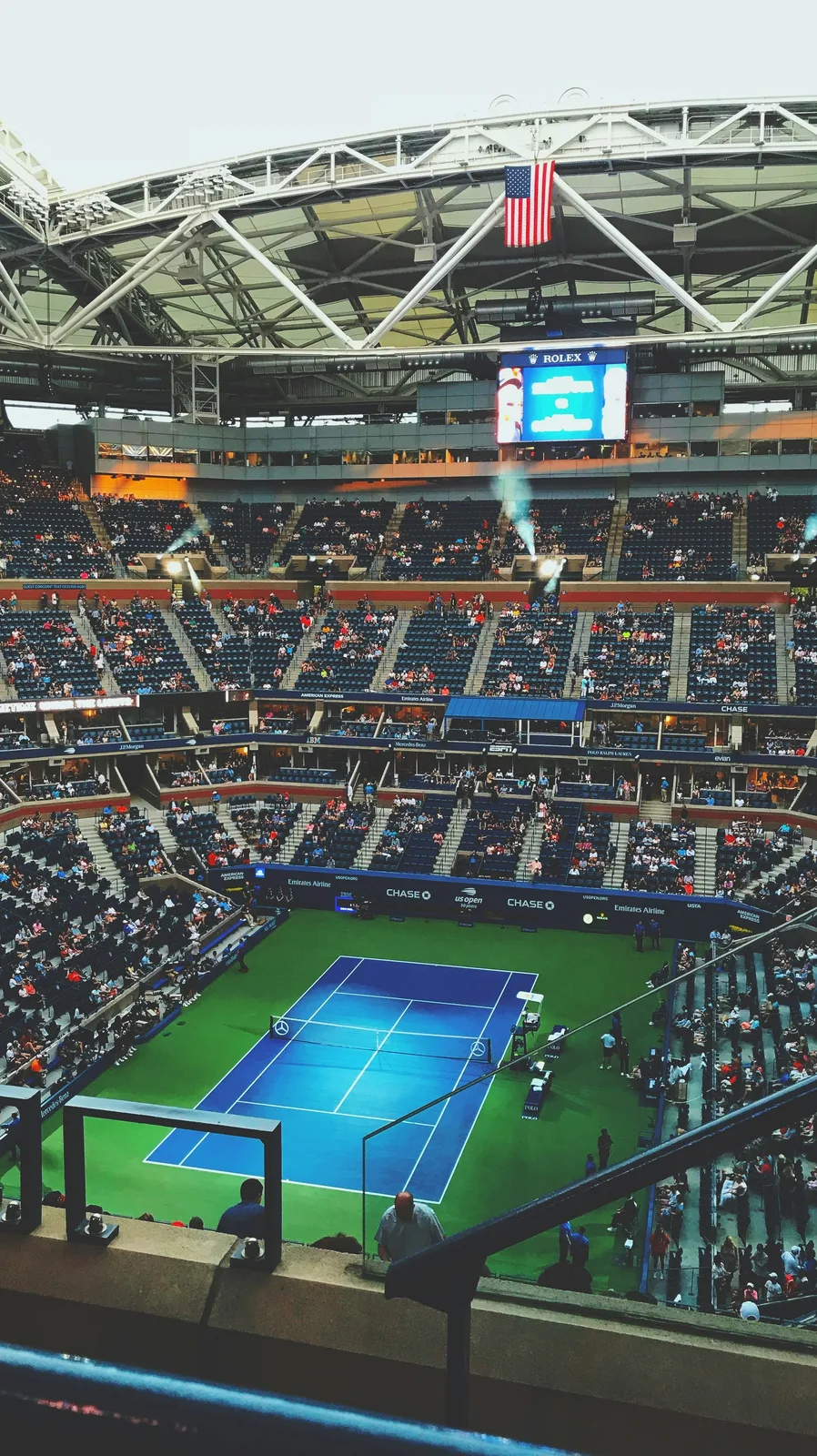
Coco Gauff arrives at the US Open on the 30th of August four weeks from now, one Wimbledon semi-final into the best grass season of her career, three years removed from the last time she held the trophy she is chasing. She has two Grand Slam titles. Neither was won under the two coaches now on her side of the net. And the specific fix the coaches were hired to deliver, the fix that has cost her the clay identity she was holding twelve months ago, is by her own camp's timeline supposed to land around now.
This is how she got here, and what the numbers say about whether the fix is about to drop.
The constants, and the specialists next to them
The Gauff coaching story is usually reported as a series of chaotic touring-coach changes. Gilbert to Daly to MacMillan, three coaches in less than two years, a former Wimbledon champion tut-tutting on Instagram each time about the pattern. That reading is the small part of a longer story. Underneath the visible touring-coach turnover sit three constants that most reporting misses.
The first is her father, Corey Gauff. He was her primary head coach from childhood through to July 2023, at which point he officially stepped back from the daily-instruction role and repositioned as high-level strategy, career management and off-court mentorship. He has not gone anywhere. In his own recent framing he leaves the daily tennis instruction, technical drill work and tactical execution entirely to her actual touring coaches, but the strategic layer above is still his.
The second is Patrick Mouratoglou. Gauff was discovered by Mouratoglou at age ten, brought into the Mouratoglou Academy on the French Riviera via his Champ'seed Foundation for promising young players. She was based there for the best part of a decade, through to June 2023. Mouratoglou was not her primary week-to-week tour coach as she rose through the juniors and into the WTA top ten, but he remained the academy mentor and consultant across the years, publicly praising her mental fortitude and leadership from her teens, and her 2022 French Open final run was made from that base.
The third is Jean-Christophe Faurel. He first coached Gauff for a twenty-one-month period beginning March 2019, when she was fifteen. Her breakthrough Wimbledon run at that age was made under him. He left the camp in December 2020, was away for forty months, and returned as head coach in April 2024. He has been in that seat ever since, which means he was already back beside Gauff during the final five months of the Gilbert era, was there through the Matt Daly period, and remains there now alongside Gavin MacMillan.
The right way to read the coaching arc, then, is not a series of separate teams. It is her father and Mouratoglou providing the long strategic backdrop, Faurel returning at the head-coach seat in April 2024 after a four-year gap, and a rotating cast of touring and specialist coaches doing the day-to-day work under and beside them. Diego Moyano as the co-coach who broke her into the WTA top ten in the year to April 2023. Pere Riba as the main touring coach for a few months of 2023, credited with the Citi Open and Cincinnati titles. Brad Gilbert as the consultant and head coach who took her from Cincinnati into the 2023 US Open title and up to world No. 2. Matt Daly as the grip and serve mechanics specialist, hired in September 2024 after the Gilbert firing, working next to head coach Faurel through the 2024 WTA Finals and 2025 French Open titles. Gavin MacMillan as the biomechanics specialist, hired in August 2025 to rebuild the serve properly, credited with the Wuhan title in his first months on the job, with the consistent line (mostly) of Faurel running alongside them.
The Gilbert breakthrough, and the season that ended it
Brad Gilbert joined in July 2023, as consultant and head coach beside Pere Riba on the road. The Cincinnati title had come six weeks earlier under Riba as touring coach; Gilbert added the US Open in September 2023, with Gauff beating Aryna Sabalenka in the final. It was her maiden Slam and it was the moment her senior career acquired its shape. She was nineteen. Gilbert added an Auckland title in January 2024 to complete his year on the job in the trophy column.
2024 was a harder year. Two Slam semi-finals, at the Australian Open in January and at Roland Garros in June, but both ended in losses to the eventual champions, Sabalenka and Iga Świątek respectively. She won the Roland Garros doubles title in June with Katerina Siniakova as her partner, beating Sara Errani and Jasmine Paolini in the final. But at both Wimbledon and the US Open she went out in the fourth round, on both occasions to Emma Navarro, the same young American beating her twice at Slams in three months. Two Slam semi-finals had become the ceiling, not the floor.
She parted ways with Gilbert in September 2024, six weeks after that second Navarro loss.
The Daly period, and the coach who returned
Matt Daly was hired in September 2024 as a technical specialist. His brief was the grip and the serve mechanics, both of which had been visibly wrong even in the winning matches of 2023. He walked into a camp that already had Faurel back in it. Faurel had returned five months earlier, in April 2024, in the head-coach seat he still holds, meaning Daly joined an existing head-coach-plus-player relationship rather than replacing one.
What followed was the best coaching return per month of Gauff's career. Daly's first tournament with her was the China Open in Beijing at the end of September 2024. She reached the final, losing to Karolína Muchová. She reached a Wuhan semi-final the next week. And in November 2024 she won the WTA Finals in Riyadh, going 2-1 in the round-robin group with wins over Świątek and Pegula and a loss to Barbora Krejčíková, then beating Sabalenka in the semi-final and Zheng Qinwen in the final. Her second major title in fourteen months, and Daly's first two months on the job.
Daly then built her a clay identity across the spring of 2025. Stuttgart quarter-final, Madrid final (lost to Sabalenka), Rome final (lost to Paolini), and then Roland Garros in June, where she beat Sabalenka in the final for a second Grand Slam. Five clay tournaments, four in the last four, one title. The Daly-Faurel period was producing the deepest and most technically legible version of her tennis anyone had seen.
Then Wimbledon 2025, and a first-round loss to Dayana Yastremska. The one bad tournament in the whole run. She parted ways with Daly six weeks later, on the eve of the US Open in August 2025. Faurel stayed.
The MacMillan rebuild, and the specialist Pat Cash knew
Gavin MacMillan was hired in August 2025 as the biomechanics specialist. He is the coach who rebuilt Sabalenka's serve in 2022, the year Sabalenka went from a hard-court player with a broken serve to a world No. 1 with a repeatable one. His brief with Gauff was narrower and more specific: fix the serve, particularly under pressure. She had hit forty-two double faults in three matches at the Canadian Open the week before he was hired. The signal was not subtle.
Pat Cash, the former Wimbledon champion, has been the loudest external voice on the rebuild. In an Instagram video in September 2025, just after MacMillan was hired, Cash pointed out that of the three fundamental movements of a tennis serve, Gauff was "doing too much of one," throwing the whole holistic balance off. In the same post Cash noted that he had previously worked alongside MacMillan on the serve of Brandon Nakashima, jokingly hoping MacMillan had picked up a few tips from him. The specific person now rebuilding Gauff's serve had already worked on the same problem for a different player, with Cash in the room.
Cash returned to the theme in January 2026 with a sharper line: "Gauff's serve could have been a five-minute fixing job, but she has taken years to sort it out." He praised MacMillan as a "serving guru" but warned Gauff about the structural dangers of changing coaches too frequently and delaying critical technical adjustments. In March 2026, after a poor hard-court start to the year, he rejected the framing that her problems were psychological. "It doesn't matter how mentally tough you are, if your biomechanics and technique is faulty," Cash said, adding that the double faults were because "her technique keeps breaking down."
The Cash arc matters not because he is right about everything but because he has been on-message for three quarters of a year with specific technical claims. And the 2026 numbers support the technical read, unevenly, in a specific way that decides how to read Flushing Meadows in one month's time.
What the numbers say, one year into the rebuild
MacMillan has been in place for eleven months. The straight comparison between the peak of Gauff's serving crisis in the summer of 2025 and her 2026 season through Wimbledon looks like this.
Double faults per match, down from 6.11 to 5.73. First-serve percentage, up from around 61.5 to 64.8. Aces per match, down from 2.90 to 2.65. In 2024 she had 430 double faults across the season, the third-most in WTA Tour history for a single season. In 2026 through Wimbledon she has 257, still No. 1 on Tour, 56 clear of the next closest player. In February at Dubai she hit forty-eight double faults in four matches, a single-tournament WTA record.
The reading is uneven in a specific way. The first serve has improved. Rising toward 65 per cent is a measurable, defensible piece of technical progress; her ball toss and initial motion have found a cleaner rhythm. The second serve has not. The tiny drop in double faults per match, from 6.11 to 5.73, proves the second serve remains volatile. Analysts note the motion looks cleaner in practice, but under pressure in tight deuce games or high-pressure tiebreaks, her biomechanics still break down into the old habits.
Which is why her Wimbledon 2026 semi-final loss to Muchová is worth naming as a specific technical moment, not a soft anecdote. A wild double fault late in the final ten-point championship tiebreak was the specific ball on which the momentum shifted away from her. Old biomechanics, high-pressure moment. Exactly the pattern the season's numbers had been quietly predicting.
Her own read on it
Gauff has been asked about the serving in every press conference. Her framing has been consistent and pragmatic. On the coach change last summer, she said she did not want to keep playing with bad habits, emphasising a willingness to endure a difficult transition phase for sustainable long-term improvement. On the good days, when the serve clicks, she has said it feels like "night and day," that she can stop thinking about mechanics and just compete.
The tension line, though, was one she delivered on court, not in press. Visibly frustrated during a 2026 loss, she was heard gesturing towards MacMillan and saying she had done everything he had wanted her to do for the last six months. That is not a player disowning the rebuild. It is a player asking, at the moment it mattered, whether the rebuild was working. Which is a fair question, and it is the same question she will be answering at this year's US Open.
The Sabalenka precedent and the late-2026 target
Here is the piece of context that decides how to read the US Open. When MacMillan overhauled Sabalenka's serve in 2022, it took nearly a full year before Sabalenka drastically minimised her double faults and won a Grand Slam. That is the empirical precedent for how long a MacMillan rebuild takes to translate from technique work into Slam-winning form. Twelve months, give or take.
Gauff's own camp has said her technical overhaul is a long-term project designed for late 2026 and beyond. MacMillan was hired at the end of August 2025. Late 2026 puts the target squarely at the US Open.
Which means Flushing is not an ambiguous read on the MacMillan project. It is the exact window her own camp identified as when the rebuild should start producing results. If she wins the tournament or reaches the final, the rebuild has landed on schedule and the Sabalenka precedent has held for another player. If she goes out earlier and the second serve wobbles under pressure the way it did against Muchová in the Wimbledon tiebreak, the timeline has slipped and the coaching model has its next question to answer.
Two numbers to watch at Flushing Meadows
If you want to watch the tournament through the lens the coaching camp is watching it through, two specific numbers make the rebuild visible.
The first is her double-fault count per match. Her 2026 average is 5.73, top of the WTA. Under 3.5 per match through her first three rounds at Flushing means the MacMillan rebuild has finally landed. Above 6 per match and the technical vulnerability under pressure is unchanged from the summer.
The second, if she draws Elina Svitolina, is break-point conversion. Svitolina has beaten Gauff three times in six months this year, across three surfaces: Australian Open quarter-final on hard, Dubai semi-final on hard, Rome final on clay. That is a specific tactical match-up the current setup has not solved. If they meet again at the US Open, break-point conversion is the number.
What the specialist model is asking us to notice
Every serious club player who has taken lessons has faced the same choice at some smaller scale that Gauff is running at the top of the sport: work with one coach who knows your whole game and stays through the plateaus, or bring in a series of specialists who each fix one piece and move on when the piece is fixed. Gauff has run neither model cleanly. She has run a hybrid: one long partnership with Faurel, since she was fifteen, with a rotating specialist next to him each time the technical problem in front of her changed. It is a hybrid that has produced two Slams, one WTA Finals title, three quarters of a season at No. 4 in the world, and a serve rebuild that is either about to land or about to prove that twelve months was not enough.
The João Fonseca profile we published earlier this summer sat with a very different coach-player shape, the seven-year partnership with a single voice. The five questions to ask your coach and the piece on what good coaches actually do in the first ten minutes both come at the coach-player question from the club side. Gauff is neither the Fonseca shape nor the club shape; she is running the specialist model at Slam scale, in public, with the double-fault numbers on the leaderboard.
If you would like a touring professional to produce a properly rated read on your own tennis, All Court exists for exactly that. You put your phone against the back fence, film a session, and upload it. You get a "talking head" session inside your own video from a touring professional who, if you like, can choose again and again or switch up. Plus the AI-enabled platform tags each shot and rates it by comparing it against ratings of thousands of shots from hundreds of players graded by the same touring pros and elite coaches. The output is a personalised coaching session on your footage and an All Court Rating for each shot you hit and a cumulative All Court Rating that compounds every time you film more of your play. This allows you see which parts of your game are improving and which specific piece of coaching should be paid to fix them. There is no joining fee, no club waitlist that closes inside a generation, and no begging a coach to slot you into their already full schedule or to play at an inconvenient hour. Join the waitlist at allcourt.club/join.