Why you forget most of your tennis lessons
The lesson made sense at the time. The coach said three things, you nodded, you tried them in the next rally. Two weeks later, you can name maybe one of them. There is a structural reason for that, and it is not your memory.

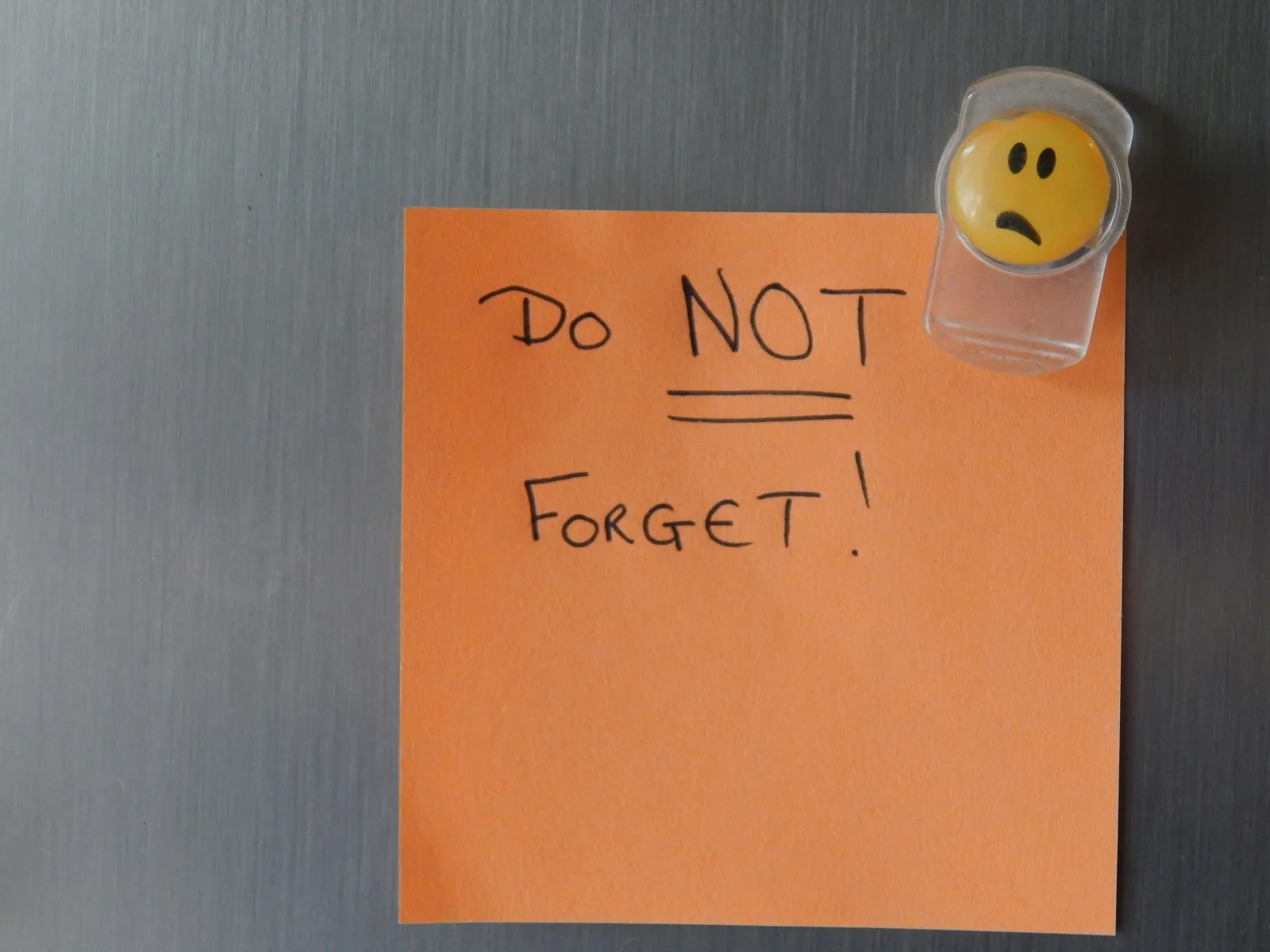
You took a lesson two or three weeks ago. The coach told you something specific about your forehand. At the time, it made sense. You tried it for the rest of the session, you felt the difference once or twice, and you left the court thinking you had something to work on.
It is now Tuesday. Try to remember exactly what they said. Not the gist. The actual cue, in the words they used, applied to the specific moment in the swing they were talking about. Most players, if they are honest, cannot. The lesson happened. The improvement, mostly, did not.
This is not a memory problem. It is a structural problem with how tennis coaching has, for most of its history, been delivered.
Why a one-hour lesson is the wrong unit
Almost every other thing you have ever tried to learn comes with a record. A YouTube tutorial you can rewatch. A book you can re-read. A spreadsheet of notes from a meeting. A recording of a presentation. Even a school lesson came with a textbook and homework. The information arrived once, and then it stayed where you could come back to it.
A tennis lesson does not come with a record. The coach speaks. You listen. You hit some balls. You speak. They speak. An hour passes. You drive home. The information you carried out of the lesson is whatever your working memory could hold while also coordinating a tennis swing under instruction. Which is, on most cognitive tests, not very much.
Then a week passes. Then another. The next time you play, the cue is half-remembered. By the time you take the next lesson, the previous one has effectively reset to zero, and the coach starts again, often with the same correction. This is not anyone's fault. It is the format.
The four things that go wrong, predictably
Too much information at once. A normal lesson covers four or five things in an hour: a stance adjustment, a contact-point note, a footwork pattern, a tactical observation, maybe a serve cue. Each one is reasonable on its own. Together they exceed what you can actually retain, let alone apply, in the days afterwards. Coaches know this and try to keep the focus narrow. You, hungry for fixes, ask for more. The lesson over-delivers and your retention undershoots.
No repetition. The single most reliable mechanism for moving information from short-term to long-term memory is spaced repetition, and the research is old. Hermann Ebbinghaus published the forgetting curve in 1885, showing that without reinforcement, the brain discards roughly half of newly learned material within an hour and up to 79 per cent within a month. A 2015 replication by Murre and Dros at the University of Amsterdam confirmed the original numbers almost exactly, 130 years on. What a coach tells you on Saturday evaporates on a schedule that has been documented in academic literature since the Victorian era. A weekly tennis lesson is, by that schedule, somewhere between useless and counterproductive: the cue arrives in week one, vanishes on a curve, and is not heard again until the lesson is already gone. The lesson that should compound just resets.
No visual reference. Most of the things a coach is telling you about during a lesson are visible. The contact point is in front of the body, or it is not. The wrist is laying back, or it is not. The shoulder turn is complete by the time the ball arrives, or it is not. The coach can see these things in real time. You, inside the swing, cannot. Without a video record, the cue lives only in the coach's description of what you were doing, and your second-hand image of it. By Tuesday, even the second-hand image has faded.
No system to come back to it. Even if you write down what your coach said, the note tends to disappear within a fortnight. There is no shared place where the feedback lives. There is no version that tracks your game over time. The most basic thing you would expect from any other learning system, a record you can return to, is missing from the standard tennis-coaching format.
What this means for how you actually improve
The players who improve fastest, including most professionals, are not the players who have the most lessons. They are the players whose feedback compounds. They get a correction. They have a way to revisit it. They watch themselves doing it. They watch themselves stop doing it. They get the next correction and add it to the first, rather than replacing it. Each piece of feedback builds on the previous one because none of them has been allowed to evaporate.
For a touring pro this happens through a coaching team that watches every session, takes notes, reviews video, and references prior corrections constantly. The system itself does the compounding. The player just shows up and works.
For an amateur, the system has to be assembled differently because the resources are different. But the principle is the same. If feedback does not have a way to outlast the session it arrived in, it does not change the player.
What an actually compounding feedback loop looks like
Three things, in increasing order of importance.
Fewer corrections at a time. Two cues per session is more useful than five. You can actually hold them through the week. This is the cheapest improvement you can make to how you take lessons, and most players would benefit from it without changing anything else.
A written record you can return to. Even a few sentences after each session, written by the coach or by you, makes the feedback survivable. You can re-read it on the morning of your next match. You can hand it to a different coach later. You can compare what you were working on six months ago with what you are working on now. The act of writing it down forces specificity.
Video, with the feedback attached. This is the thing that changes the math. A clip of your forehand, with a coach's annotation pointing at exactly the moment the racket was late or the contact was back, is feedback in a format that does not evaporate. You can rewatch the clip. You can rewatch it before practice, see the cue, then go and try to apply it. You can return to it six weeks later and check whether the pattern has actually changed. The visual reference does the work that working memory could never do alone.
Get coaching you can actually return to
This is, structurally, what All Court is built to do. Upload a clip at allcourt.club/intake and a touring pro from the network will watch it and send back a written analysis of what they see. The clip stays on file. The notes stay on file. You can re-read them before your next session, look at the same footage with the cue in mind, and come back in two months with a new clip to see whether the pattern has shifted. The feedback compounds because the format does not let it disappear.
None of this replaces a good coach in person. The argument is not that video is better than a hitting partner who can see you live. It is that the standard one-hour-and-then-nothing lesson cycle is the wrong unit of feedback for how a player actually improves, and that any system that keeps the feedback in front of you between sessions will outperform it.
The players who keep getting better are the players whose feedback compounds. The lesson is not lost because you have a bad memory. It is lost because the format gave it nowhere to live. Change the format and the same coaching, the same hour, starts to be worth something it could not be worth before.