Padel for tennis players: the crossover guide
A tennis player walking onto a padel court for the first time notices four things in the first minute. What padel actually is, what a tennis game brings to it, what it does not, and how big the sport really is once you take the marketing away.

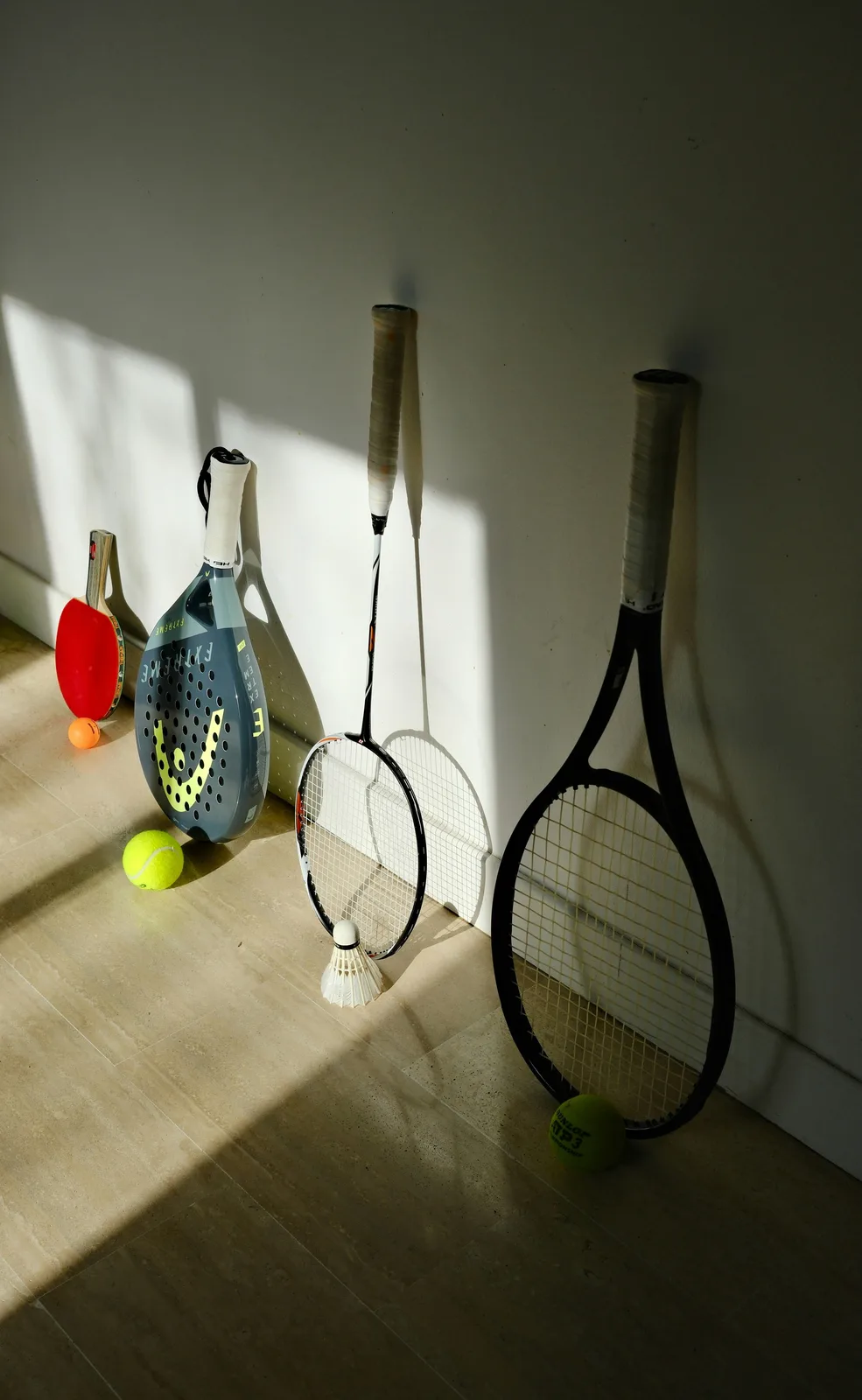
Walk onto a padel court for the first time as a tennis player and you notice four things in the first minute. The court is small, roughly seventy-seven per cent of a doubles tennis court, twenty metres long by ten wide. The court is enclosed. Glass panels rise four metres up the back walls, metal mesh continues above them, the side walls are a mix of the same. The racket in your hand is solid, perforated, and has no strings. And the ball, which looks like a tennis ball and pretends to be one, has slightly less pressure inside it and behaves like a tennis ball dug out of your basement cupboard when you can't find any good balls and need to play tennis with a time obsessed partner at the club in 10 minutes.
What padel actually is, in tennis terms
The dimensions we've dealt with. The net is 88 centimetres high at the centre, a touch lower than tennis. Every court is enclosed by walls of glass and mesh, and those walls are in play. The ball may bounce off them and stay live, which is, apart from not having strings to absorb the shot and create spin, the single biggest technical difference to grasp.
Serving is underhand. You must strike the ball at or below waist height, and you have to bounce it on the ground first, tennis-drop-shot-style, before you can hit it. There are no overheads on serve. Padel is really always played as doubles and the only lines that matter for the boundaries are the ones inside the service boxes on the serve. Once the ball has bounced on the floor on the receiving side, the receiving pair can play it off their own back glass, their side glass, or both, and the rally continues. Full rules explainer, updated for the 2026 FIP revisions, covers the fine print.
That is the frame. Same net, similar ball, entirely different geometry, and a wall that turns every deep shot into a live construction problem for the defender.
What your tennis game brings to padel
More than a total beginner and less than most people think.
Volleys transfer. The half-court exchanges in padel are essentially the volley exchanges of tennis doubles at the net, and a decent tennis volley translates directly. Same short backswing, same firm wrist, same block-and-place mentality.
Touch transfers. Padel is a touch game more than a power game. Drop shots, lobs and angle placement carry the point far more often than pace. A tennis player who has spent time on their slice, their drop and their lob is already speaking padel's first language.
Doubles positioning transfers. The two-players-move-as-a-unit rule of tennis doubles is the padel rule too. If your partner covers cross-court, you cover the middle. If you move forward, they move forward. Every good tennis doubles habit is a good padel habit.
Tactical net awareness transfers. Reading the ball's speed, angle and spin off an opponent's racket to guess the next shot is exactly the tennis-doubles read. Same muscle.
What does not transfer
The heavy topspin forehand you spent five years learning does not exist here. The solid perforated racket does not string a ball for spin the way a strung frame does; the shots are flatter by construction. The 200-kph flat serve you have been quietly proud of is also gone, because you are not allowed to hit one. Underhand serves at waist height are the rule for a reason: the small court would be unplayable at tennis serve speeds.
Wall play is entirely new. When an opponent hits a hard deep ball, the tennis instinct is to back up, plant, and drive a return. The padel instinct is to let the ball pass you, bounce, come off the glass, and then hit a controlled ball on the return trajectory the wall has just handed you. It is a completely different physical reflex, and it is the single thing that separates tennis players who have played padel three times from tennis players who have played it thirty times.
Court coverage is smaller and quicker. You do not run the same distances you run in tennis singles. The rally patterns are shorter in space and longer in shots, which means the aerobic demand is lower but the reaction-time demand is higher. Tennis singles fitness helps but is not the specific ask; the specific ask is bursts and net anticipation.
Two tennis voices on the transition
The tennis-to-padel move has been the subject of open, useful testimony from two of the tennis world's more direct voices. Andy Murray as a player who has crossed over somewhat (or at least invested in padel); Patrick Mouratoglou as a coach watching another tour pro try to do the same. Both point at the same thing from opposite sides.
Murray, as the player. Andy Murray is the most publicly invested tennis-to-padel figure in the UK through his stake in Game4Padel, and he has spoken openly about the crossover in interviews with padel media in 2025 (YouTube, Instagram). Three of his points are worth naming.
The tennis-hybrid trap: when Murray reviewed footage of his early padel sessions he saw a pure tennis stroke pattern rather than a real padel one, and his account of it is that raw tennis habits are a temporary fix that get exposed against experienced padel players. The humbling: his tennis pedigree did not save him, and he has been candid about being beaten early by older club players who had spent years on padel positioning and wall rebounds, players he could have played tennis with any hour of any day and won every set. Wall play as the specific unlearn: the hardest habit to break, in Murray's telling, is the tennis instinct to take everything out of the air or expect a groundstroke trajectory, and learning to judge the ball off the glass properly is what he singles out. Trips to Spain to work with top international padel coaches were what eventually reshaped how he read court geometry, patience and shot execution.
Mouratoglou, as the coach. Patrick Mouratoglou, who is himself learning padel and has been publicly working through the mechanics by observing the French ATP touring pro Corentin Moutet on court (Facebook, Stop playing padel like tennis), is unambiguous about what a top tennis player looks like when they walk onto a padel court cold.
"Corentin is playing tennis on a padel court," Mouratoglou has said. The problem is not the raw material. Moutet moves well and has touch, and Mouratoglou notes that "the guy is unbelievable, you can't hit a winner on him." The problem is that Moutet keeps trying to hit a padel ball with tennis mechanics, and padel does not let you get away with it. Two of Mouratoglou's specifics are worth citing directly.
On pace: "in padel, you can't hit the ball hard." The reason is mechanical and mildly ridiculous. The ball bounces off the wall, comes straight back at you and your partner, and hitting hard is a form of self-harm. And on spin: "in padel, you want to play low, so no topspin." Modern tennis has spent the last twenty years teaching every serious player to hit heavy topspin off the forehand; padel wants the opposite. Pros in padel, Mouratoglou observes, play slow and low and defend rather than attack. Moutet's padel partner, in Mouratoglou's telling, watches him hit full-power topspin and thinks the padel equivalent of what are you doing, we don't do that here.
The two voices, taken together, give the same instruction to a tennis player considering the transition. The tennis game is a starting point, not a finishing point. Murray reached that view by playing padel and getting beaten. Mouratoglou reached it by teaching tennis and watching Corentin Moutet try to skip the step. The temptation to keep playing tennis strokes with a solid racket is the trap that keeps most crossover players stuck one level below where they think they should be.
The size of the story, with the honest comparison
Padel is having its moment. The size of the moment, once you place it against tennis, is smaller than the marketing suggests.
Globally, tennis has 106 million players by the ITF's 2024 Global Tennis Report. This is still growing year on year, up around 25% over a four year period previous to when that report was released. Padel has passed 35 million according to the FIP World Padel Report 2025. Tennis is tat least three times the size of padel by that count. The gap has narrowed. It is still a gap.
In Britain, tennis is at 5.8 million adult participants (LTA, summer 2025). Padel has crossed the 1 million mark (LTA Padel, 2026), doubling participation year on year, and court numbers have gone from a few hundred to over a thousand in three years at a compound annual growth rate above 130%. Tennis is still roughly six times the sport padel is. Padel is growing at a multiple no other racquet sport in Britain is currently posting.
In the United States, the story is different in the other direction. US tennis participation crossed 27.3 million in 2025 (USTA). US padel has around 100,000 players spread across 454 courts. That is a factor of roughly 270 in tennis's favour. Padel investment is beginning to arrive in the US, notably the Pro Padel League's $15 million funding round in March 2026, but the sport is at fringe status stateside for now.
In Spain, none of the above applies. Padel has already overtaken tennis on the ground: roughly 17,000 padel courts against 15,000 tennis courts nationwide (Padel Magazine), and the Spanish top pros of padel are household names in a way that the country's tennis pros no longer entirely are. Spain is the only place in the world where padel has arrived at parity or better with tennis. Everywhere else, the tennis-to-padel ratio is still very large, and worth remembering when the growth headlines land. This is of course not taking into account viewership on both traditional and social media channels.
Who is actually building the sport in Britain
Padel is a UK-facilities story more than a UK-participation story right now, because the participation is chasing the court supply. Four operators dominate the layer between the reader and a court.
Playtomic is the dominant European booking platform, functionally the OpenTable of padel and pickleball. Whichever club you find in London or on the Continent, you probably book it through Playtomic. Their Global Padel Report is also the best public data source on the sport.
Game4Padel is the Edinburgh-based UK-specific operator that builds or converts padel courts at tennis clubs and leisure sites and also runs standalone padel centres. Andy Murray is publicly invested. If you have played padel in Britain and it was not at a David Lloyd, there is a high chance it was on a Game4Padel court.
David Lloyd is the club-network side of the rollout. Their UK padel court count is growing fast on the back of their existing tennis-and-fitness member base. If you already hold a David Lloyd membership, you probably have padel included; if you are considering joining a private club and padel is the deciding factor, David Lloyd is the largest network to check first.
MATCHi and a widening set of smaller operators are building venues and booking layers around these three, and the LTA has begun to formalise the padel calendar alongside its tennis one. The market is moving fast enough that a fixed list of venues is out of date on the day of publication; a proper city-by-city venue read for London is a piece for another day.
Is it worth trying, from a tennis player's vantage
Yes, with two caveats.
Yes if you play mostly doubles, enjoy net points, do not need a big serve to feel like yourself, and would like a racquet sport that gives you a fast physical hit without the aerobic weight of tennis singles. Padel rewards the tennis player who is already at the net eighty per cent of the time in mixed doubles, and it does so within thirty minutes of a first session.
No if you play tennis mostly for the singles physical demand, love hitting heavy topspin from the baseline, and take your serve seriously as an offensive weapon. Padel neutralises the three things the modern tennis singles player has spent years developing, and there is only so much fun to be had in a game that rewards the parts of your tennis you have never quite loved.
The overwhelmingly common outcome for tennis players who take a padel racket the first time is a good afternoon, a set of new bruises on their non-hitting hand where the wall play caught them out, and an ambivalent verdict that turns into a padel booking a month later. The sport is not tennis. It is not trying to be tennis. It is worth trying at least once because the answer to whether you like it is not knowable in the abstract, only on the court.
Get a properly rated read on the game you actually play
If you are considering padel because your tennis has plateaued and you are looking for another racquet sport to shake it up, a plateau in tennis is worth diagnosing before you assume it is permanent. All Court exists for exactly that. You put your phone against the back fence, film a session, and upload it. You get a "talking head" session inside your own video from a touring professional. Plus the AI-enabled platform compares those ratings against thousands of shots from hundreds of players graded by the same touring pros and elite coaches. The output is a personalised coaching session on your footage and an All Court Rating for each shot you hit and a cumulative All Court Rating that compounds every time you film more of your play, so that you can see whether the game you already play has more in it than the flatline you have been feeling. There is no nominator, no joining fee, and no waitlist that closes inside a generation. Join the waitlist at allcourt.club/join.