Sensa is the one we're betting on in the US padel race
What makes a successful padel club? We sit down with Sensa CEO Aditya Khilnani to discuss the hybrid social-sport model reshaping the US racquet landscape.

Padel in the United States has moved beyond novelty. What began as a niche import from Europe and Latin America is now evolving into a structured growth category within the American racquet landscape. Courts are appearing in cities that had none only a few years ago. Developers are beginning to evaluate padel as an anchor for mixed-use developments. Global brands are entering the conversation. The land grab has begun — but with growth comes fragmentation, and not every operator is building with a long-term vision.
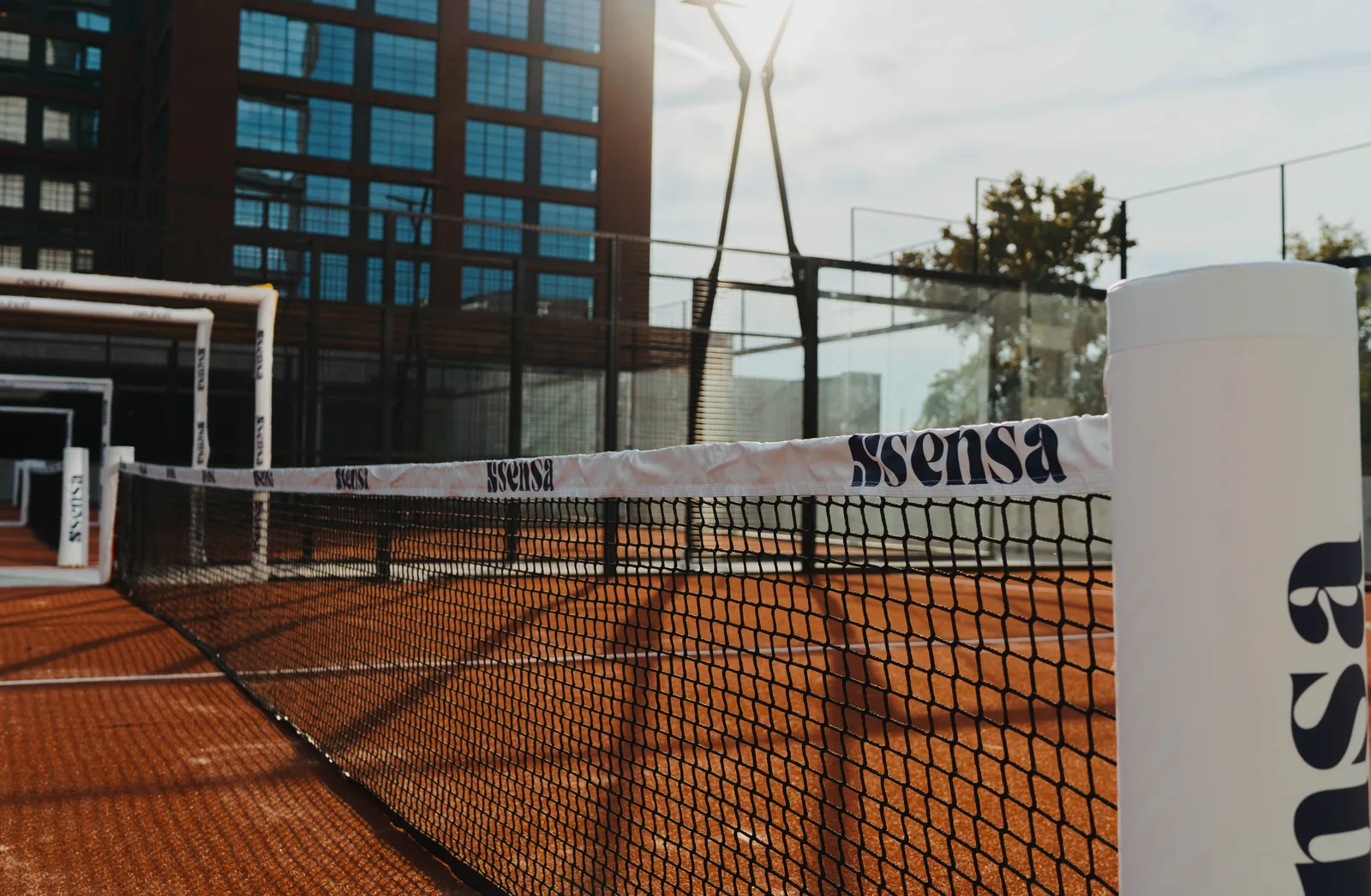
Among the emerging U.S. operators, Sensa stands out not simply for growth, but for reshaping how padel clubs are designed, positioned, and scaled. It is the operator we are watching most closely — and the one we’re betting on.
When we sat down with founder and CEO Aditya Khilnani, what became immediately clear was not just ambition, but structural thinking. His approach reflects a deliberate effort to redefine what a racquet club can be in the American context. Rather than treating padel as a standalone sport, Aditya has introduced a hybrid social-sport model that integrates hospitality, technology, and community programming — a framework that is quickly influencing how other operators approach the category.

Redefining the club model
Early U.S. padel installations were largely recreational and infrastructure-focused. Sensa approached the market differently. From the outset, Aditya emphasized a lifestyle-driven experience — clubs that feel curated, social, and culturally relevant rather than purely athletic.
The result is a new blueprint for racquet clubs: environments where sport intersects with design, work, and social connection. This shift has begun to change expectations among both consumers and developers. Increasingly, new entrants are building clubs that look and feel less like traditional courts and more like lifestyle destinations:; a ‘third space’ where players want to spend time before and after a game, a ‘third space’ where you meet new friends — a trend that Sensa helped catalyze.
Institutionalising an emerging industry
Perhaps more important than the aesthetics is the operational rigor behind the brand. Khilnani has brought structured management practices, data-driven decision making, and institutional discipline into a sector that historically operated on a fragmented, founder-led basis.
From site selection to membership systems, Sensa operates with a level of strategic planning more commonly seen in mature hospitality or wellness brands. That approach is beginning to influence how investors and real estate partners evaluate racquet operators. Where padel was once seen as experimental, it is increasingly viewed as a scalable platform — and Sensa has played a role in shaping that perception.
Setting the tone for new entrants
Across the markets we monitor, the influence is becoming visible. Design elements, hospitality integration, and hybrid programming models that were once uncommon are now appearing in new projects. The combination of courts, social experience, restaurants & bars within the club, and lifestyle positioning is rapidly becoming the default framework for operators entering the U.S. market.
When multiple operators begin to echo the same playbook — from branding to spatial design — it usually signals that one company has set the tone. In this case, that company appears to be Sensa.
Scaling with discipline
Sensa’s growth strategy reflects patience rather than acceleration for its own sake. Locations are chosen with intention, often within premium mixed-use environments that amplify community engagement. Partnerships with established global brands signal a long-term view of the category, positioning padel not as a passing trend but as part of a broader wellness and lifestyle movement.
Why we're betting on Sensa
The U.S. padel market remains early in its evolution. There will be rapid expansion, experimentation, and inevitable consolidation. Some operators will scale quickly; others will fade as the category matures.
What we see in Sensa is not just a company opening courts, but a platform shaping expectations — influencing how clubs are designed, how partnerships are structured, and how racquet sports integrate into modern urban life.
For those watching the race unfold, Sensa is emerging as more than a participant. It is becoming a reference point — a model for how to build padel clubs the right way in America.
And that’s why we’re betting on Sensa!