What does the Karate Kid, Bruce Lee and Precision Shooters have to do with Tennis?

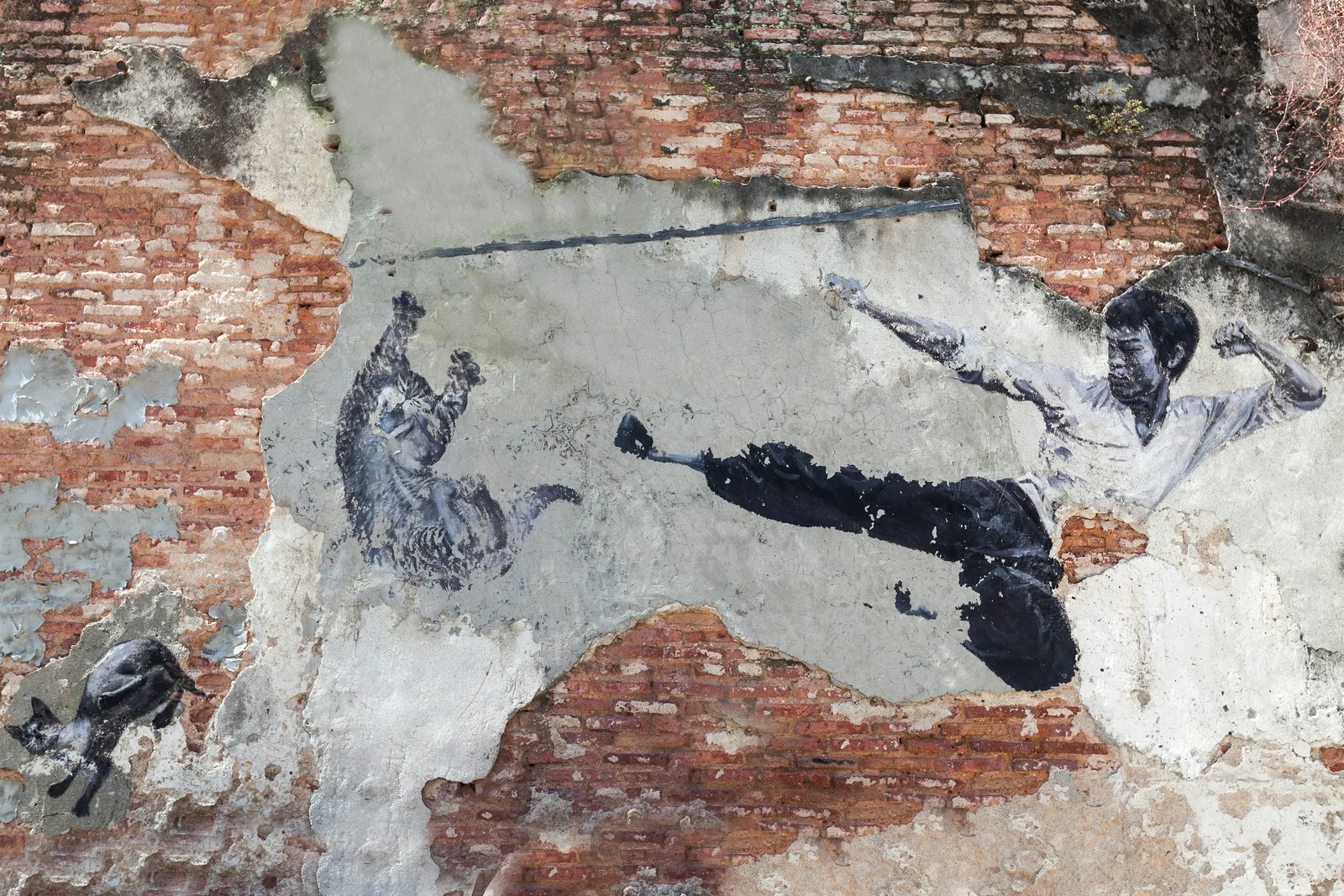
“Wax on, wax off” was never really about polishing cars. It was about wiring the body so execution becomes automatic. Then again, Daniel LaRusso vs. Cobra Kai in the original (and best) Karate Kid was acting.
Bruce Lee, (disparagements made by Quentin Tarantino in Once Upon a Time in Hollywood aside), was a real martial arts warrior and went one step further. He taught that you never strike while holding your breath. Exhale on impact. Stay loose. Stay precise.
And as for precision rifle shooting its all about pulling the trigger at the right time in the breathing cycle.
Tennis is no different.
The most underrated performance skill in tennis
Most amateur players think of improvement in terms of mechanics. They work on their forehand shape, their contact point, their footwork patterns and of course all of that matters very much.
But there is a layer underneath these shot mechanics that elite performers understand very well, and most amateurs ignore entirely. It’s breathing as execution control and physiological regulation.
There are two strands of research that are particularly relevant.
The first comes from precision sports.
Breathe out - rifle shooting
Studies in elite rifle shooting, including work by Konttinen and colleagues published in the Journal of Sports Sciences, show that top performers synchronise execution with specific phases of respiration. Trigger pull is commonly timed with controlled exhalation or the natural pause after exhale. Respiratory rhythm is not incidental. It directly influences trunk stability, central nervous system activity, and micro-movement at the moment of execution.
Respiration creates subtle oscillations in the torso. Those oscillations affect motor output. Elite shooters reduce that instability by coupling motor execution to breath phase.
Sure, tennis is not rifle shooting, but the underlying principle holds. Ball strike requires trunk rotation, coordinated limb acceleration, and precise timing. If respiration influences trunk stiffness and neural drive, then synchronising exhalation with contact is not aesthetic, but a mechanical necessity.
Exhaling at contact stabilises the core, reduces unnecessary muscular guarding, and creates a consistent rhythm between breath and strike. Watch elite players closely and you will see that contact is rarely silent. Some breathe out most audibly with a loud grunt (or high-pitched yelp to the annoyance of other players). The audible exhale is not theatre, but rather force regulation.
Breathe in at the right time and last longer
The second strand of research comes from respiratory physiology.
Romer and McConnell, writing in the Journal of Applied Physiology, demonstrated that inspiratory muscle fatigue can limit high intensity exercise performance. The muscles primarily responsible for breathing (the diaphragm and intercostal muscles) are not passive. Under repeated effort they fatigue, and when they fatigue, performance declines.
Tennis is an intermittent sport. Rally, recover. Rally, recover. Over the course of a match the breathing system is under constant load. If breathing becomes shallow, chaotic, or unsynchronised with movement, fatigue accumulates faster than necessary.
This is where the second habit matters.
Inhale during the opponent’s strike and during ball travel. Use that window to reset rhythm. Instead of erratic breath patterns, create a deliberate cycle: exhale on contact, inhale as the ball leaves your opponent’s racket, exhale on your next strike.
That rhythm does two things. It supports oxygen delivery and it prevents the gradual tightening that undermines late set performance. It also keeps attention anchored in the present phase of play rather than drifting.
The point is not to turn tennis into meditation. It is to recognise that breathing is part of execution as much as, say, forward movement in playing a shot. Precision sports have known this for decades. Exercise physiology confirms that respiratory fatigue is real and performance limiting.
Breathing is trainable, measurable, and repeatable. For most serious club players, it is the simplest performance gain available.
Watch the video to see how this works in live rally situations, and start paying attention not just to how you swing, but to how you breathe when you do.