Where to play tennis during the Madrid Open
A city guide for tennis players visiting Madrid during the Mutua Madrid Open — where to play, where to watch, and where to eat when the kitchens finally open.

Madrid is a city where kitchens open at 10pm rather than close. Where a Tuesday night feels like a Saturday. Where the dress code for a neighbourhood tapas bar somehow involves better shoes than most people own. Over the last few years it has become the go-to European city for culture, food, architecture, and the sort of effortless living that other capitals spend a fortune trying to manufacture.
For tennis, it is all of that with a tournament bolted on.
The Mutua Madrid Open runs until May 3rd at La Caja Mágica, the Magic Box, one of only nine ATP Masters 1000 events on the calendar. The points on offer sit just below the Grand Slams. The draw is stacked. The atmosphere, even by Spanish standards, is something else. And unlike most tournaments, the city around it is as much the event as anything happening on court.
Here is how to do Madrid properly if tennis is your thing.
Play
Most visitors come to watch. But Madrid is one of the few tournament cities where you can genuinely play at a serious level while you are there, whether you know someone or not.
Pay and play
Ciudad de la Raqueta is the easiest option for visitors. Europe's largest racket sports centre, open to everyone, no membership required. Over 40 courts in total, including 20 clay courts (16 outdoor, 4 indoor), hard courts, and padel. There is a restaurant, a pool, and enough space that you will not struggle to find a court even during tournament week. Book through Playtomic in under a minute.
Canal de Isabel II is a 40,000 square metre municipal sports complex in Chamberí with seven tennis courts, open seven days a week from 8am to 10pm. It is the kind of no-frills, well-maintained public facility that reminds you Spain takes its racket sports seriously at every level. Also bookable through Playtomic.
Playtomic is worth downloading before you land. It is the dominant court-booking app in Spain and covers most public and semi-private venues across Madrid. Courts at municipal facilities can be as little as a few euros per hour.
Private clubs
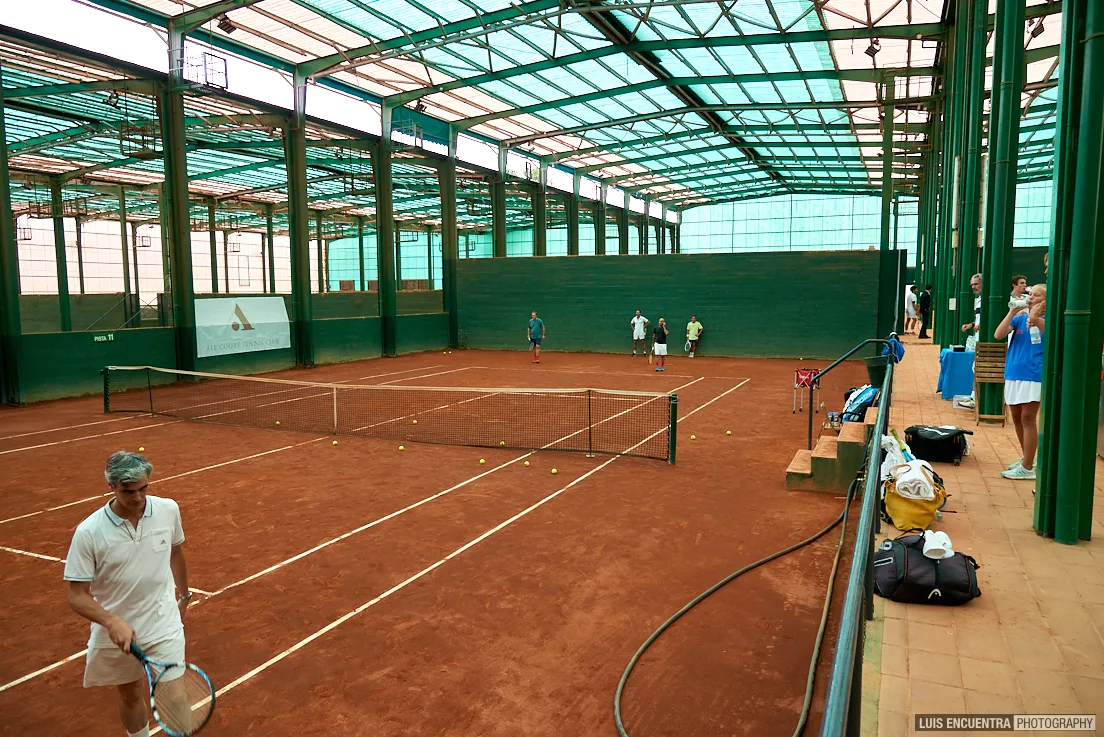
Club de Tenis Chamartín was founded in 1922 and is the most centrally located private members club in the capital. Twenty courts: fourteen clay, four artificial grass, two hard, plus padel (of course there is padel, it is Spain). A swimming pool, a gym, a proper Spanish restaurant, and San Miguel so cold it hurts your teeth. Access is through membership or guest invitation, but it is worth knowing it exists if you have connections in the city.
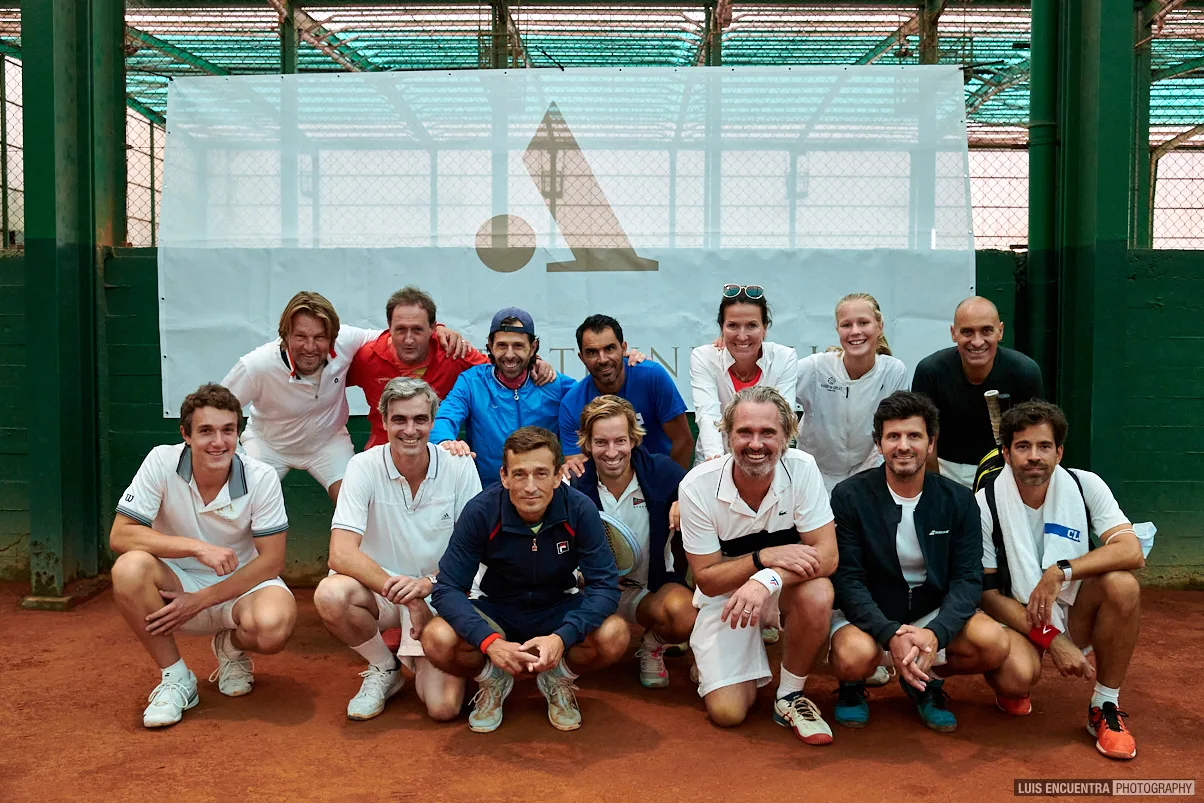
Long-time All Court contributor Francisco "Pato" Clavet, former world number 17, is a Chamartín member. Pato has stories about beating McEnroe, Hewitt and Federer that improve with every telling, and a presence at the club that makes it feel less like an institution and more like someone's very well-equipped back garden.
Watch
The Madrid Open trophy cabinet tells you everything about the event's stature. Nadal has won it five times. Djokovic and Federer three each. Murray and Alcaraz are on the list. On the women's side, Petra Kvitová leads with three titles, Simona Halep and Serena Williams with two apiece.
This year, Alcaraz is absent with a wrist injury. But Sinner is rolling, Tsitsipas looks sharp on clay again, and the draw is deep enough that the quarterfinals onwards should be worth cancelling dinner for. Or at least postponing it. This is Madrid, after all. Dinner can wait.
La Caja Mágica itself is worth the visit regardless of who is playing. Three main courts, each with a different surface. A retractable roof. A facade of translucent material that filters natural light into the stadium in a way that makes everything look slightly cinematic. Spanish architecture has a habit of hiding surprises in plain sight, and the Magic Box is no exception.
Watch, then play
There is something that happens when you spend a few hours watching top-level tennis in person. You notice things the broadcast misses. The weight of the ball off the strings. How early the good players set up for the next shot before the current one has landed. The sound a cleanly struck forehand makes on clay, and how different it is from the muffled version you produce on a Tuesday evening.
If you have ever watched a match courtside and thought "I need to fix my game," you are not alone. That impulse is worth acting on while it is fresh. Film your next session and let one of our touring pros tell you what they see. Sometimes the gap between what you think you are doing and what you are actually doing is the most useful thing anyone can show you.
Eat
In Madrid, the answer to most culinary questions is tapas. The answer to the rest is also tapas, but with better wine.
A few that are worth the walk:
El Sur, in La Latina, does traditional tapas with a wine list that rewards curiosity. Casual, local-heavy, and the kind of place where the waiter remembers what you ordered last time even if there was no last time.
Casa Labra has been serving fried cod since 1860 and shows no sign of considering anything else. It is in the city centre, it is always busy, and the cod is exactly as good as a dish that has survived 166 years ought to be.
Bodega de la Ardosa in Malasaña has operated since 1892. The croquettes are the draw. So is the feeling of drinking in a bar where the walls have absorbed more interesting conversations than you will ever have.
Juana la Loca, back in La Latina, does a truffle and mushroom risotto that has no business being as good as it is in a tapas bar. A modern twist in a neighbourhood that mostly resists them.
La Venencia is a sherry bar in the centre that stocks more varieties of fortified wine than most people knew existed. The cured meats are excellent. The atmosphere is the sort of thing people describe as "authentic" when what they really mean is "unchanged since the Civil War."
And a local tip, courtesy of our long-time Madrid member Pedro Domeq, whose family has been in the sherry business for generations: head to Calle Ponzano. The street has become something of a phenomenon, with the hashtag #ponzaning doing the rounds on social media as shorthand for old-school cool, contemporary tapas, and the kind of evening that starts at one bar and ends at a fifth. Pedro suggests starting at Arima for a solid tapas base before exploring whatever else the street throws at you. Alternatively, Angelita, further downtown, is a wine bar built around wines by the glass, the idea being that you try as many as possible while eating food that would be the main event anywhere else.
Shop
Madrid is not a city that requires encouragement to shop, but if you need direction:
Gran Vía is the obvious starting point. International brands alongside Spanish retailers. Zara and Mango both have flagship stores here that occasionally stock lines available nowhere else, which is either a marketing strategy or a test of your luggage capacity.
Salamanca is where the money goes. Chanel, Gucci, Prada, alongside Spanish houses like Adolfo Dominguez and Loewe. The neighbourhood itself is worth a walk even if your credit card stays in your pocket.
El Rastro is Madrid's Sunday flea market in La Latina. Vintage, second-hand, antiques, and the general chaos of a market that has been running long enough to have sold things that are now in the Prado.
Chueca and Malasaña are the neighbourhoods for independent boutiques, local designers, vintage shops, and the sort of one-off finds that make people ask where you got that.
Sleep

The Mandarin Oriental Ritz opened in 1910 as simply "The Ritz," designed by Charles Mewès, the same architect behind the Ritz in Paris and London. Hemingway stayed here. So did Ava Gardner and the Spanish Royal Family. It has 162 rooms, all individually decorated, and the sort of lobby where you instinctively stand up straighter.
See
The Prado Museum is one of the most important art collections in the world. Velázquez, Goya, El Greco. The building is neo-classical, the interiors are cool and quiet, and it serves as a useful reminder that some things have been worth looking at carefully for centuries.
Which, if you think about it, is not a bad principle for tennis either.
Next in this series: Rome during the Italian Open. Where to play, where to eat near the Foro Italico, and why the Eternal City during a tennis tournament is one of the best trips in the sport.
Related posts
Why your hip keeps getting tight after you play