Where to play tennis during the Italian Open
A city guide for tennis players visiting Rome during the Internazionali BNL d'Italia — where to play, where to watch, and what to do when the clay dust settles.

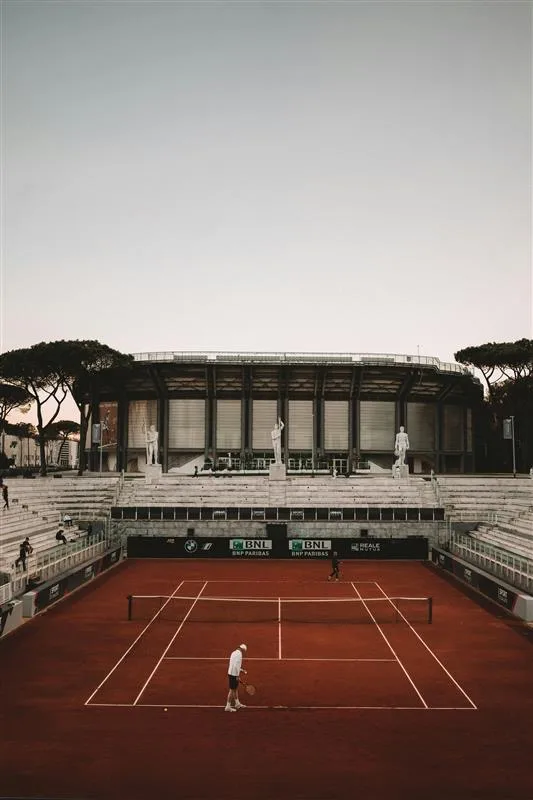
Rome does not try. That is the thing about Rome. Other cities curate themselves for visitors, smooth the edges, put up signage. Rome just exists, and you either keep up or you do not. The food has been the same for centuries because it was right the first time. The buildings lean but do not fall. The dress code is whatever the Romans decided it was that morning, and it is always correct.
For tennis, this is the city that built a stadium surrounded by marble statues of athletes and then hosted a clay court tournament in it for the better part of a century. No other stop on the tour comes close.
The Internazionali BNL d'Italia, the Italian Open, runs from 5 to 17 May at the Foro Italico. It is one of nine ATP Masters 1000 events, the last major clay court tournament before Roland Garros, and the draw is as deep as anything outside a Grand Slam. Over 300 matches across the men's and women's draws. And unlike most tournaments, the venue is not a temporary structure bolted onto a car park. It was built between 1932 and 1938 for the 1940 Olympics, which were diverted to Helsinki before being cancelled entirely, and it looks like something between an Olympic village and a Roman forum. Which, in Rome, is about right.
Here is how to do Rome properly if tennis is your thing.
Play
Every serious club in Rome plays on red clay. This is not a city that entertains alternatives. If you are visiting during the Italian Open and want to hit, there are options at every level, from public courts you can book in seconds to private clubs where the pros warm up before their matches.
Pay and play
Tennis in Rome is worth knowing about if you want a hit without knowing anyone in the city. Coach Andrea runs English-language sessions near Ponte Milvio, the neighbourhood just north of the Foro Italico, and the reviews from visiting players are consistently excellent. Court rental and lessons can be arranged directly at reasonable rates. If you are visiting during tournament week, this is probably the simplest way to get on a clay court without a membership or a local contact.
Private clubs
Tennis Club Parioli was founded in 1906 and is Rome's oldest tennis club. Twenty courts spread across five hectares in the parklands of Villa Ada, in the leafy Parioli neighbourhood. A gym, a pool, a restaurant, and the sort of setting where a morning hit feels less like exercise and more like something you might see in an Italian film from the 1960s. Access is through membership, but the club is worth contacting directly if you have connections in Italian tennis or want to arrange a session through a local coach.
Circolo Canottieri Lazio was established in 1913 as a rowing club on the banks of the Tiber. It now has five top-quality clay courts, a restaurant with views of the river, and a swimming pool. During the Italian Open, professional players regularly train here. Founded as a rowing club and still operating as one, which means the sporting culture runs deeper than most tennis-only facilities.
Mara Santangelo, the 2007 Roland Garros doubles champion and former world number 27, is a friend of All Court and based in Rome. When she is in town, Mara can arrange a hitting session. Given that she spent the better part of a decade on the WTA tour, it is not your average knock-up. If you are serious about your game and want to experience what it feels like to rally with a Grand Slam champion on Roman clay, it is worth getting in touch.
Watch
The Italian Open has been running since 1930. Nadal won it ten times. Djokovic has six titles. The women's roll call includes Serena Williams, Maria Sharapova, and Swiatek. It is not a tournament that needs to justify its credentials.
This year, Alcaraz is out with a wrist injury sustained at the Barcelona Open. But Sinner is the home favourite and playing the best clay court tennis of his career after winning Monte Carlo. The draw is deep, Musetti will have the crowd behind him, and the Italian wildcards will add their own seasoning to the draw. The atmosphere when an Italian player is on court at the Foro Italico is unlike anything else on tour. Italians do not just watch tennis. They conduct it.
The venue itself is worth the trip regardless of the draw. The Stadio Nicola Pietrangeli, the old number one court, was built between 1931 and 1933 and is surrounded by eighteen white Carrara marble statues depicting Olympic athletes. It was inspired by Hellenic architecture and has remained essentially unaltered since it was first built. The Campo Centrale seats 10,500. The Grand Stand Arena holds another 5,000. But Pietrangeli is the court with the soul.
Watch, then play
There is a particular thing that happens when you watch clay court tennis live at the Foro Italico. You notice the geometry. How the angles open up on a slow surface. How the best players construct a point over six, seven, eight shots before finishing it. How the ball kicks differently off clay than it does on the hard courts you probably play on at home.
You leave the stadium thinking about your own game. That is the right instinct. Film your next session and let one of our touring pros tell you what they see. The gap between what you think you are doing and what you are actually doing is almost always where the improvement lives.
Eat
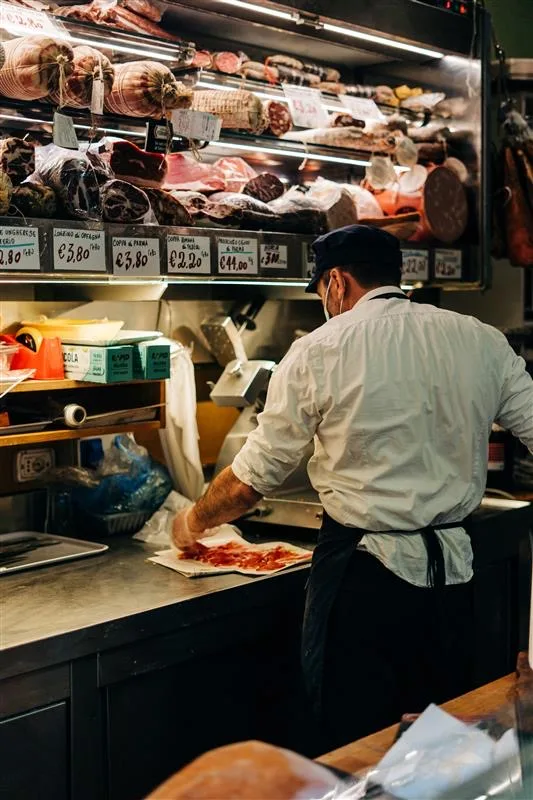
Roman food operates on a simple principle: perfect a small number of things and never change them. The city has four canonical pasta dishes (carbonara, cacio e pepe, amatriciana, gricia) and an entire culinary culture built around the argument over who does each one best.
A few that are worth the walk:
Felice a Testaccio has been open since 1936 and is one of the most celebrated restaurants in the city for cacio e pepe. A waiter mixes the pasta at your table, working the pecorino and pepper into the tonnarelli until the sauce coats every strand. The retro chequered floors, the local crowd, the fact that you need to book well in advance. All of it earned.
Da Enzo al 29 in Trastevere is family-run, small, and perpetually busy. Traditional Roman dishes with exceptional ingredients. The kind of place where you queue because the alternative is eating somewhere worse.
Flavio al Velavevodetto is in Testaccio, opened by a former protégé of Felice's kitchen. The cacio e pepe is excellent. So is the coda alla vaccinara, Roman oxtail stew, which is the sort of dish that reminds you slow cooking existed long before anyone made it a lifestyle trend.
Roma Sparita in Trastevere serves its cacio e pepe in a crispy cheese bowl and rose to fame after Anthony Bourdain visited. It is the rare case of a restaurant becoming famous for a gimmick that also happens to be genuinely good.
Seu Pizza Illuminati is not a secret, so book ahead. The decor is contemporary but the dozens of pies remain classic, from margherita to marinara. Newer varieties feature ingredients like ourice and shichimi togarashi. The antipasti and the fritti, particularly the fried tramezzino sandwich, are also worth ordering before the pizza arrives.
For the nights when your favourite player does not perform, Osteria Fernanda does Italian comfort food in an avant-garde setting. The rigatoni with a sweet root-based sauce and the snails with radishes seasoned with Campari are the kind of dishes that justify a heavier price tag.
And if the occasion calls for it, La Pergola holds three Michelin stars and a terrace overlooking the city. Rome has seventeen Michelin-starred restaurants, second only to Naples in Italy. Heinz Beck's cooking is rooted in Mediterranean tradition with international flourishes. It is the sort of place you go once and remember in detail.
Closer to the Foro Italico, the Prati and Ponte Milvio neighbourhoods have their own dining scene worth exploring. L'Arcangelo in Prati does modern trattoria cooking. Roman classics with a chef's touch. And if you are near Ponte Milvio after a day session at the tournament, the bars and restaurants around the piazzale make for a very easy evening that tends to extend itself.
All Court member Maria Jakus, a longtime Rome resident, recommends starting in the centro storico and walking. Via del Governo Vecchio for the kind of restaurants and shops that reward people who wander. Cola di Rienzo near the Vatican for an afternoon that feels less like tourism and more like a Roman errand. Rome is a city best navigated on foot with no fixed plan, which, if you think about it, is also how most of the best dinners here begin.
Shop
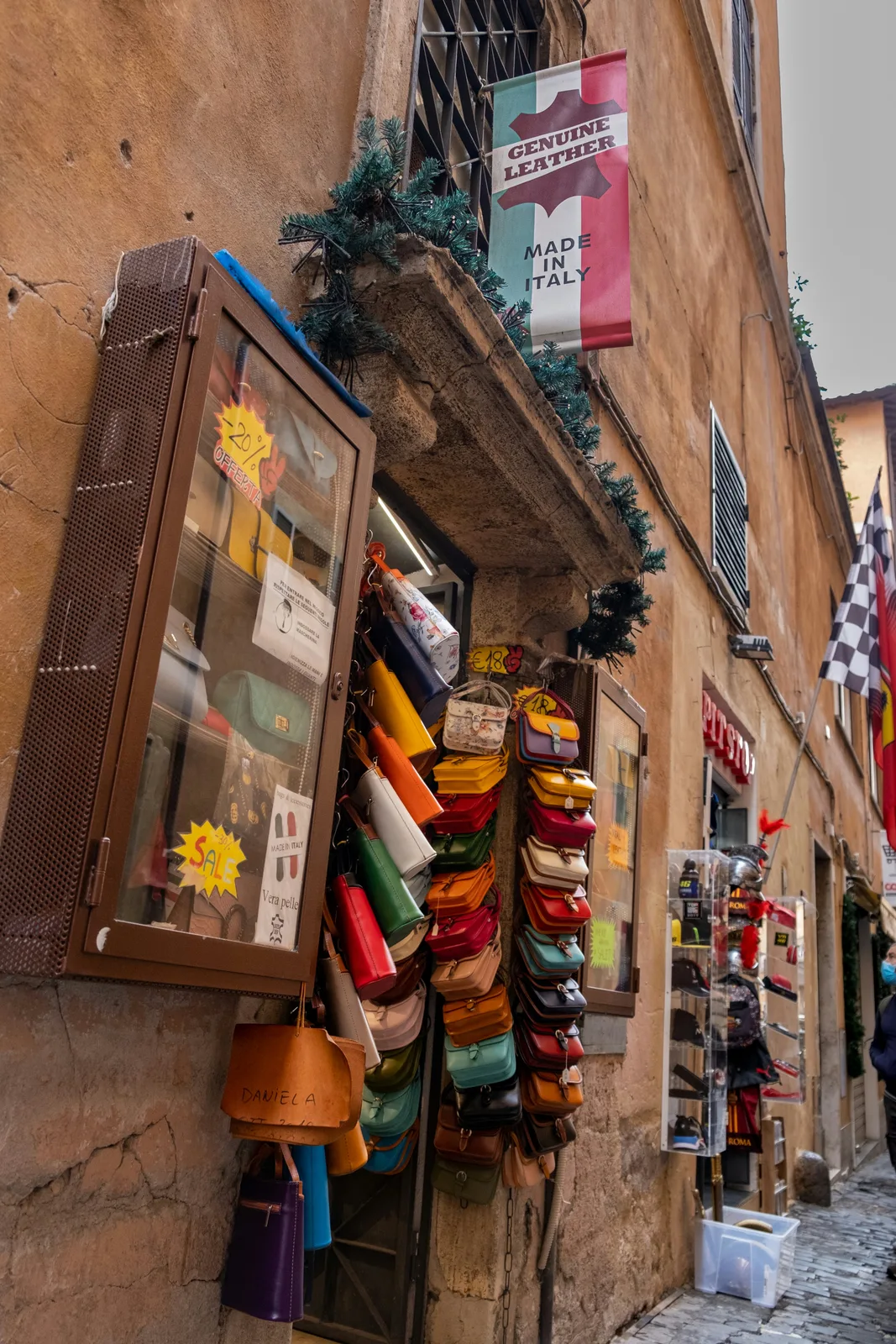
Via Condotti is Rome's answer to Bond Street. Bulgari, Valentino, Gucci, Prada, all within a few hundred metres of the Spanish Steps. The street is beautiful, the prices are not, and the window shopping alone is worth the walk.
Via del Corso runs from Piazza del Popolo to Piazza Venezia and covers everything from high street to high end. It is the spine of Rome's shopping district and the easiest way to cover ground if you are not sure what you are looking for.
Via del Governo Vecchio near Piazza Navona is where the vintage and independent shops live. Less polished, more interesting, and the kind of street where you find things that make people ask where you got that. The Otherwise Bookshop, an English-language bookstore tucked in nearby, is worth a stop if you need something to read courtside.
Via del Boschetto near the Colosseum is a quieter alternative. Local designers, small boutiques, and enough character to make it worth the detour even if you buy nothing.
Porta Portese is Rome's Sunday flea market in Trastevere. If El Rastro in Madrid is organised chaos, Porta Portese is chaos that has given up on the idea of organisation entirely. Vintage, antiques, second-hand everything, and the energy of a market that has been running long enough to have sold things twice.
Sleep
The Rome Cavalieri, a Waldorf Astoria hotel, sits on Monte Mario, a mile from the Foro Italico. Two immaculate red clay courts maintained to professional standard. During the Italian Open, they are regularly used by the world's best players as a practice facility. If you are the sort of person who wants to warm up on the same clay that a top-ten player used that morning, this is your hotel. There is also a spa, a pool, and the kind of lobby bar where you can watch the sun set over Rome while pretending you are not exhausted from a day of tennis and walking.
The Hotel de Russie is nearer the centre, between Piazza del Popolo and the Spanish Steps. Cocteau called it paradise on earth in 1917. The Secret Garden, a terraced Mediterranean courtyard with orange trees and a waterfall, is reason enough to stay. It is further from the Foro Italico but closer to everything else, and in a city where dinner does not start until 9pm, location matters less than you think.
See
The Colosseum, the Forum, the Pantheon, the Vatican Museums, St Peter's Basilica. You know the list. Rome's problem, if you can call it that, is that the entire city is a museum and the things worth seeing are so numerous that you will not get to half of them. Skip the Vatican queue with a private tour. It is worth it for the Sistine Chapel alone.
The Galleria Borghese is worth the booking effort. Bernini's sculptures are the kind of art that makes you rethink what stone can do. Cardinal Scipione Borghese's collection (Caravaggio, Raphael, Titian) sits in a villa surrounded by gardens where Romans go to walk. And walking in Rome is never just walking. It is an argument, a coffee, a detour, and an hour you did not plan to spend but do not regret.
For something different, there is a gladiator school just off the Via Appia Antica. Whether this counts as cross-training for tennis is debatable, but the footwork drills are surprisingly relevant.
If you are travelling with children, the Leonardo da Vinci Museum near Piazza del Popolo is worth the detour. Over fifty working models of his inventions, from flying machines to hydraulic systems to mechanical prototypes, most of them interactive. Kids pull levers, turn gears, and build bridges. Adults pretend they are there for the children.
Rome does not do things by halves. Neither does its tennis tournament. If you are going to be in the city during the Italian Open, clear the schedule. You will need it.
Next in this series: Roland Garros. Where to play in Paris, where to eat near the grounds, and why the French Open remains the most beautiful fortnight in tennis.
Related posts
Hailey Baptiste used to sneak into the Citi Open. Now she will be on its centre court.