Stop double faulting by doing less
Why your serve breaks down under pressure — and how shifting your focus brings it back

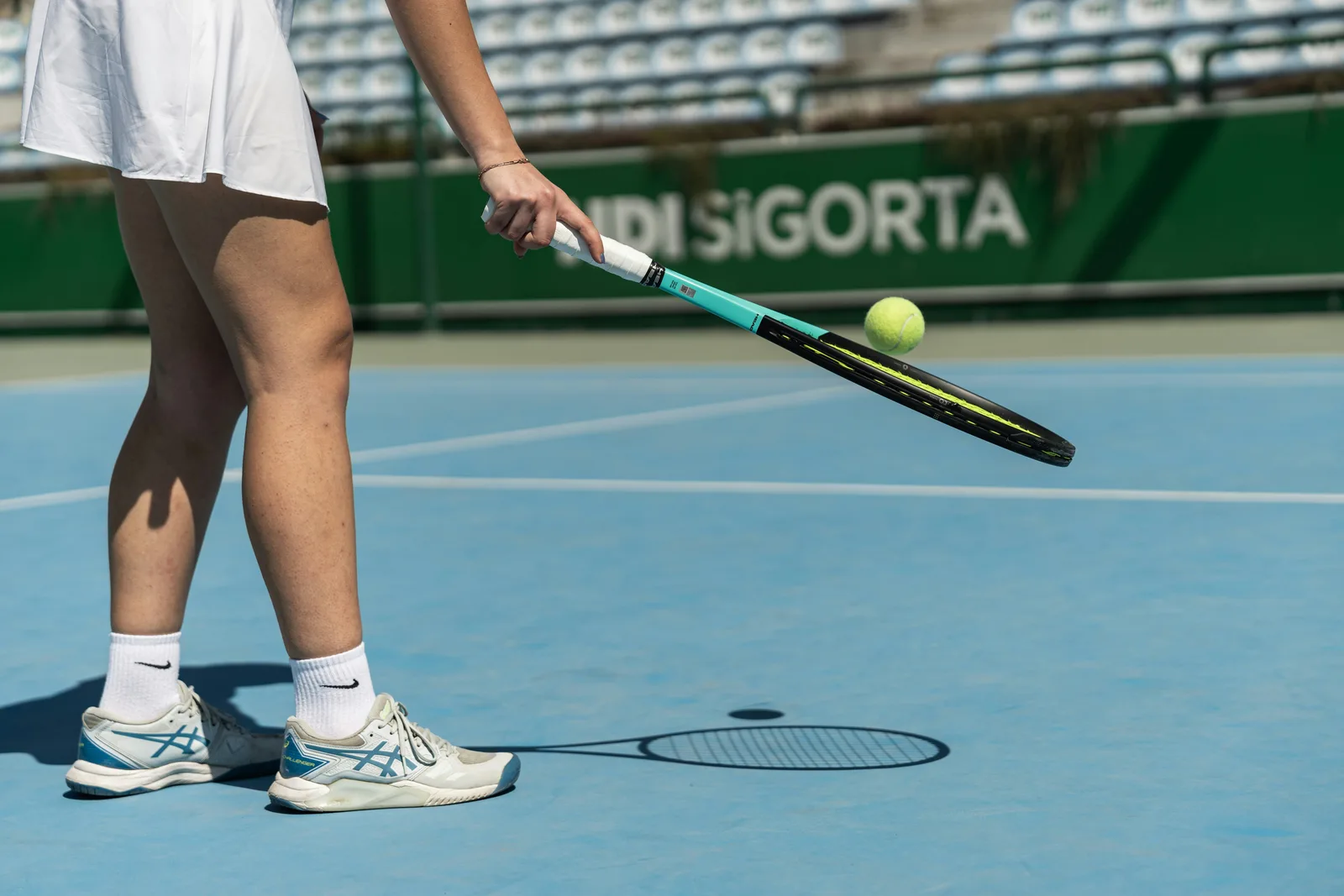
When players start double faulting, the instinct is usually to look for a technical fix. Something must be wrong with the toss, the grip, the motion.
More often, though, the problem isn’t mechanical at all.
High-performance coaches have long observed that double faults tend to appear when trust disappears. A serve that once felt automatic suddenly becomes something to manage. Players start protecting it, monitoring tension in the arm, and trying—often unsuccessfully—to avoid the very outcome they fear.
This shift happens quickly and, in many cases, unconsciously. Attention turns inward. Instead of serving, players begin thinking about serving.
That’s usually when things unravel.
The cost of internal focus
Under pressure, many players become preoccupied with sensations—tightness, nerves, timing—or with intrusive thoughts like don’t double fault. While these reactions are natural, they pull attention away from the task itself.
The serve is a rhythmic, dynamic motion. It doesn’t respond well to micromanagement.
Trying to suppress nerves or think through mechanics mid-motion often leads to hesitation, disrupted timing, and a loss of flow.
The more productive approach isn’t to eliminate these thoughts or feelings, but to stop giving them centre stage.
Step one: look outward
One of the most effective ways to stabilise the serve is by shifting attention externally.
Before serving, pick a clear target: down the T, out wide, into the body. Take a brief moment to see that spot in your mind. Make it a consistent part of your pre-serve routine.
This external focus helps prevent players from spiralling into self-monitoring. Even if tension or doubt is present, attention stays directed toward the intention of the serve rather than the fear around it.
The goal isn’t to feel calm—it’s to stay oriented toward the task.
Step two: anchor rhythm with a simple cue
Equally important is rhythm.
Instead of thinking about the serve as a whole, many coaches recommend anchoring attention to a single physical cue that promotes fluid movement. That cue might be a knee bend, a smooth arm lift, or the sensation of pushing up through the ground.
The cue should be something that can be felt, not analysed.
Focusing on a simple bodily sensation helps maintain timing and flow, replacing overthinking with awareness. It gives the body something constructive to organise around, without turning the serve into a checklist.
Keeping the serve automatic
When combined, these two elements—external target and internal rhythm cue—create a powerful framework.
The external focus keeps attention out of fear and self-evaluation.
The internal cue supports rhythm without technical overload.
Together, they help the serve remain automatic, even in moments of pressure.
Ironically, this approach tends to reduce double faults not because players are trying harder to avoid them, but because they’ve stopped interfering with a motion their body already knows how to perform.
Sometimes the most effective way to serve better is to do less—think less, control less, and trust more.
Fix your second serve with a pro
The serve is one of the hardest shots to diagnose for yourself, because the moments where it actually breaks down are usually the ones you are not watching. Film a few service games and upload them at allcourt.club/intake. A pro from the All Court network will tell you what they see in your motion. Often it isn't what the player has been trying to fix.
Editor’s note: This article is informed by performance and serving concepts shared by high-performance coach Jeff Greenwald in a past audio session with All Court. The ideas have been edited and adapted for written format.