Rafael Jódar and the PE teacher who learned tennis
A year ago he was ranked 896th in the world. His coach was his father, a high school PE teacher from Madrid who had never played the sport. Now he is 42nd and rising.
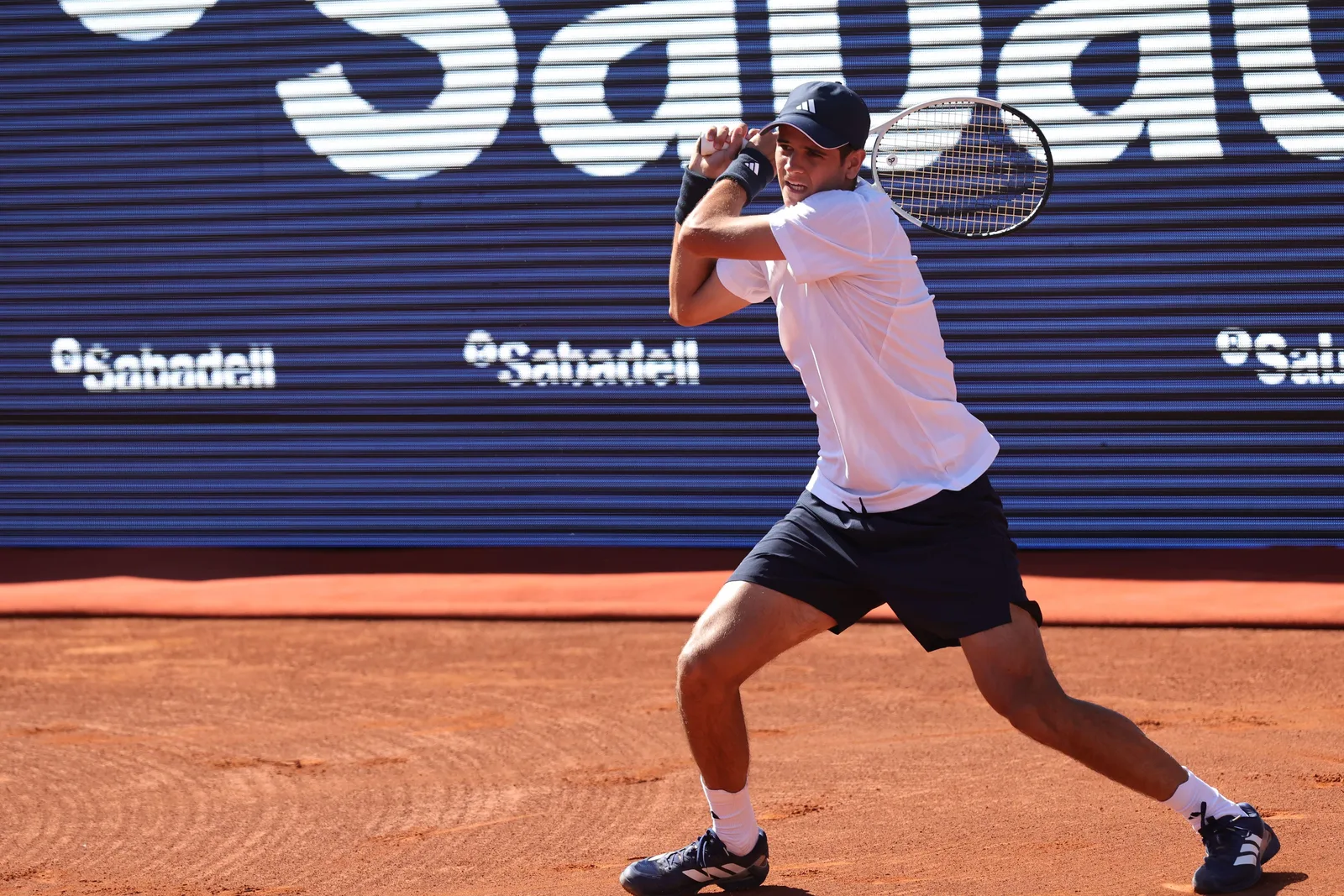
A year ago, Rafael Jódar was ranked 896th in the world. He was enrolled at the University of Virginia, winning college matches with a ferocity that suggested he might be in the wrong building. His coach was his father, a high school PE teacher from Madrid who had never played tennis.
Today Jódar is ranked 42nd on the ATP tour. He has an ATP title. He has a top-ten win. He beat João Fonseca in front of his home crowd at the Madrid Masters, and did it with the composure of someone who had been doing this for years rather than months. He is nineteen years old.
The story that gets told about young tennis players usually begins the same way. A child picks up a racquet. A parent who played the sport, or at least understood it, recognises something. A coach is found. An academy is entered. A pathway is followed. The pathway is expensive, competitive, and narrows at every stage, but it is a pathway. It exists. People know what it looks like.
Jódar's story does not begin like that.
The father who learned
Rafael Jódar Sr played basketball. He trained as a physical education teacher. Tennis was not part of his life, his expertise, or his plans. When his son started hitting balls at four years old in Madrid and it became clear that something unusual was happening, the elder Jódar did something that sounds simple and is not. He learned the sport.
Not casually. Not the way a parent learns enough to feed balls during a weekend knock. He learned it properly: the technique, the tactics, the periodisation, the competitive structure. He became his son's coach. "The team for now is just my father and me," Jódar said earlier this year. "He advises me very well."
That sentence is worth sitting with for a moment. At a level where most players employ a travelling entourage of coaches, physios, fitness trainers, nutritionists and mental performance consultants, Jódar's operation is a PE teacher and a car. The father drives. The son plays. The results, at the moment, speak for themselves.
There is a temptation to romanticise this. The self-taught coach and the prodigy son. But what makes it interesting is not the romance. It is the competence. A father learning a sport he did not play, at sufficient depth to coach a player into the top fifty in the world, is not a heartwarming anecdote. It is an extraordinary coaching achievement. The distinction matters.
Virginia and what it proved
Jódar went to the University of Virginia in 2024. American college tennis is viewed with suspicion by most of the European tennis establishment, which broadly considers it a detour at best and a dead end at worst. The pathway in Europe runs through national federations, private academies, and the junior circuit. The pathway in America runs through athletic scholarships and the NCAA. They are different ecosystems with different incentive structures, and European tennis has historically preferred its own.
Jódar stayed for one year. He won the ITA National Rookie of the Year. He earned All-American honours. Andres Pedroso, Virginia's head coach, noted his "remarkable ability of being exposed to higher levels of play." Then, on 31 December 2025, he turned professional.
The college year was not a delay. It was a bridge. Jódar used it to play high-level matches in a structured environment, with a team around him, while his game matured. The fact that European tennis culture would have steered him away from it tells you something about European tennis culture. It tells you less about what actually works.
The numbers
The speed of Jódar's rise resists easy comparison, so here are the facts. He won three ATP Challenger titles between August and October 2025. He entered the Australian Open main draw in January 2026. He won his first ATP title in Marrakech in March, beating Marco Trungellitti 6-3, 6-2 in a final where he hit sixteen winners to his opponent's three. He won 86 per cent of his first-serve points.
Then came Madrid.
At his home tournament, he beat Alex de Minaur 6-3, 6-1. His first top-ten victory, delivered with a clinical efficiency that made it look like a training session rather than a career milestone. He followed it by beating Fonseca 7-6, 4-6, 6-1, in what was billed as the meeting of the two best teenagers in the sport. The Madrid crowd, which has a refined understanding of what it is watching, treated him as if he had been there all along.
In his first 25 ATP matches, Jódar won seventeen. That is more than Nadal managed at the same career stage. More than Alcaraz. More than Fonseca. It is the kind of statistic that would sound like invention if the ATP had not published it themselves.
What the game looks like
Jódar stands 1.91 metres. He plays right-handed with a two-handed backhand. He hits flat and hard off both wings, with a forehand that arrives at the baseline like a statement of intent rather than an opening gambit. The comparisons to Sinner are more instructive than the comparisons to Alcaraz: high pace, clean ball-striking, baseline control, an excellent first serve that averages 125 miles per hour and converts at over 80 per cent.
About 86 per cent of his points end from the baseline, which tells you he is comfortable there. But there are signs of tactical diversification. He volleys well enough to suggest the net is not foreign territory, and the movement, for a player his height, is notably efficient. He does not lumber. He flows.
The thing about watching Jódar play is the absence of panic. Nineteen-year-olds on the ATP tour tend to have moments where the occasion catches them, where the level spikes and the body tightens and the shot that was landing all morning suddenly clips the tape. Jódar does not seem to have those moments. Whether that is composure, confidence, or the particular steadiness that comes from having your father standing ten metres away, it is unusual.
The question nobody is asking loudly enough
The tennis development industry is a substantial and growing business. Academies charge significant fees. National federations employ large coaching staffs. The pathway from talented junior to touring professional is understood to require institutional support, substantial capital, and access to expertise that most families do not possess.
And then a PE teacher from Madrid produces a top-fifty player by learning the sport himself.
This does not invalidate the academy model. Most players need structure, competition and specialist coaching that a single parent, however dedicated, cannot replicate. But it does raise a question about what exactly the development industry is selling, and whether the price is always justified by the product. If a father with a basketball background and a willingness to learn can coach his son to world number 42, then the value proposition of a six-figure annual academy programme deserves at least a footnote of scrutiny.
Jódar's story is not a blueprint. It is an exception. But exceptions are useful precisely because they expose the assumptions that everyone else is operating under. The assumption in tennis development is that you need the system. Jódar suggests you might need something simpler: someone who watches carefully, learns honestly, and cares more about getting it right than about credentials.
That is coaching. The credential is the result.
What happens next
Alcaraz has called him "an outstanding player." The Madrid crowd has adopted him. Roland Garros, three weeks away, will be his first French Open. The ranking will fluctuate, as every young player's does, but the trajectory is steep and the game is built on foundations that look solid rather than borrowed.
The team is still his father and him. At some point that may change. The demands of a full ATP season, the travel, the physical management, the tactical adjustments required at the very top, tend to outgrow any single coaching relationship, no matter how deep. But for now, the arrangement works. It works because the father is good at this, not because the story is charming.
Rafael Jódar Sr learned a sport he did not play, to coach a son he believed in, and produced a player the sport was not expecting. In an industry that runs on infrastructure, funding and institutional access, the most compelling development story in tennis right now involves a PE teacher, a car, and the old-fashioned conviction that if you watch carefully enough, you can teach what you see.
It is not the way it is supposed to work. Which is probably why it is working.
Related posts
Why trying to fix everything in your tennis game actually makes you worse