Move better, play longer
The simple knee prehab that builds stability
If you have ever felt that slight wobble when you stop for a wide ball, you know the feeling. Not pain exactly. Just uncertainty.
We sat down with one of our club coaches, Saša Klaneček, to talk about knee prehab and why it is less about wrapping yourself in cotton wool and more about moving better than you did last season.
Saša pays close attention to how players slow down. “Weakness during deceleration or instability when stopping is where I notice risk building,” she says. It is rarely dramatic. It is usually small things repeated over time. A slightly messy stop. A knee that drifts in. A scramble that feels heavier than it should.
“If someone consistently moves inefficiently, injury becomes more likely. In those cases I usually advise adding gym work, working with a physio, or doing structured strength training.” Alongside coaching, she teaches Pilates, and much of her off court work is about restoring balance. When the body is organised and strong in the right places, tennis feels lighter.
If she had 30 seconds with every club player, her message would be clear. “I would focus on strengthening the entire leg, especially glutes and hamstrings. A lot of knee problems I see come from over dominance of the front chain. Everything around the knee needs to be strong so the ligaments are supported.”
In practical terms, that means doing the work most players skip. “Start lifting weights and include plyometric work like lunges, jumps and deceleration drills.” Tennis is a sport of stopping and pushing off. Training those patterns changes how secure you feel on court.
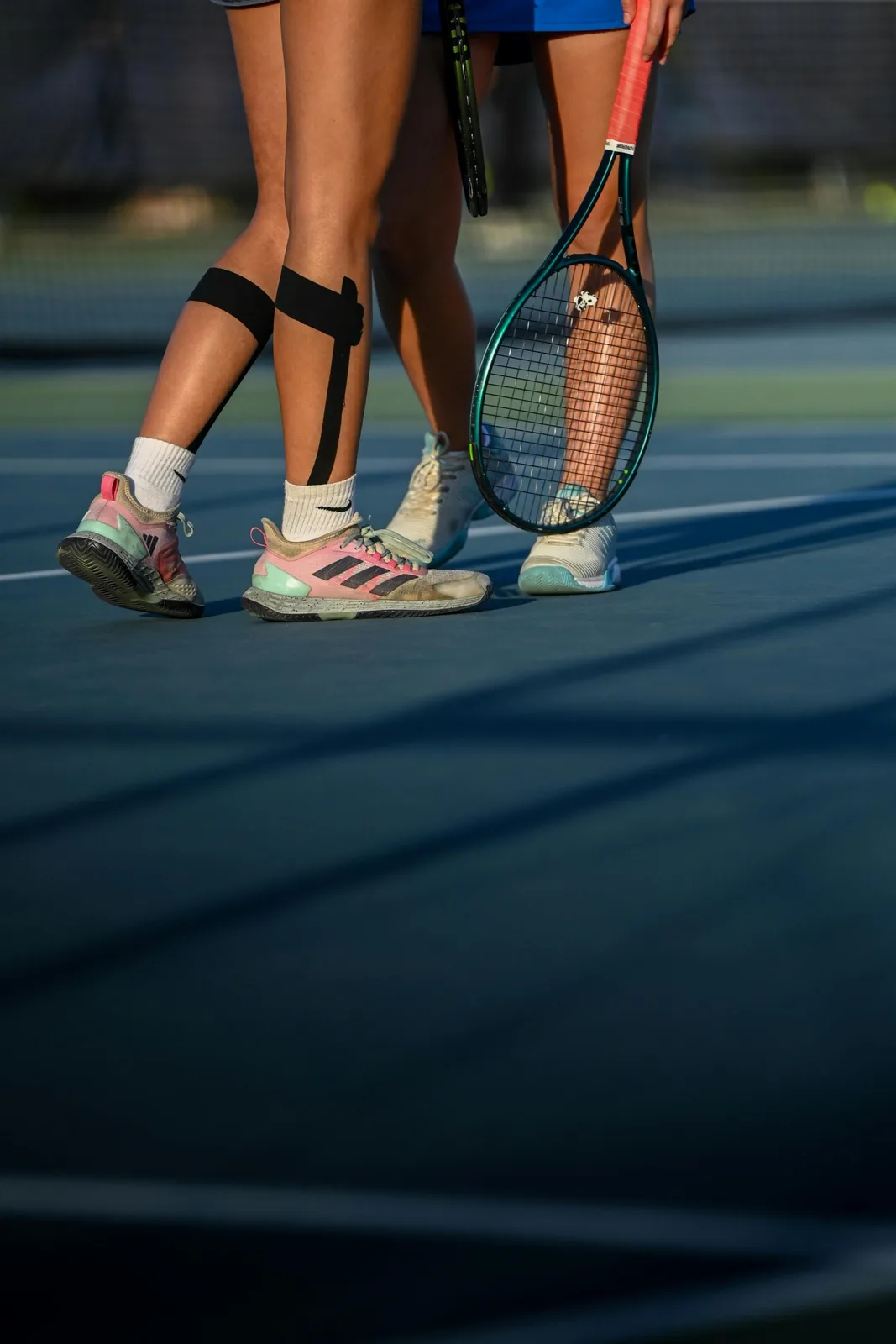
She is also honest about quick fixes. “Unless someone has had surgery, I wouldn’t recommend relying on knee supports. Overusing supports can reduce muscular activation. Strengthening the muscles around the knee should always come first.” Support should come from your muscles, not just from a sleeve.
For the once a week player, the issue is often simple. “Once a week of a specific movement isn’t enough for most people. The body needs consistent exposure to adapt.” Add two short strength sessions and some mobility work, and things shift surprisingly fast.
Age comes up a lot in this conversation. “It’s both age and preparation,” she says. “With age, especially in women, bone density decreases and weakness can increase. But preparation plays a massive role.” Strength training, different sports, proper band warm ups and mobility all make a difference. The players who feel good in their forties are usually the ones who train like it matters.
The knee itself is often just responding to what is happening above and below it. “If the front chain dominates or adductors and abductors are imbalanced, pain develops.” She knows that firsthand. “I personally had hip issues from overusing my front chain. Activating glutes and hamstrings before sessions can offload the knee.”
So what are you aiming for? “A strong knee feels stable during deceleration and push off. You shouldn’t feel unstable when stopping or changing direction.” That stability does more than protect you. It frees you. You chase the extra ball. You plant and go without second guessing.
“The biggest stress on the knee comes from deceleration, pivoting and stopping, which most people don’t specifically train,” she says. When the surrounding muscles are strong, those movements feel controlled instead of jarring. Better footwork helps too. Efficient movement reduces strain and makes you faster at the same time.
Surface matters. “Hard courts are much harsher on joints like knees and lower back. Clay is more forgiving because you can slide with less abrupt stopping force.” You might not change where you play, but you can adjust how you prepare.
When we asked what separates durable players from those constantly managing niggles, her answer was simple. “They prioritise everything. Sleep, nutrition, strength training, mobility, warm ups, recovery. Everything you put in and do with your body matters.”
Prehab, as she describes it, is not complicated. “Prehab is preventative work, controlled, intentional strengthening and mobility that mimics tennis movement in a safe environment. Rehab is post injury recovery, often done in phases with a physio.”
And it does not have to take over your life. “Even 10 minutes daily helps. Or 20 to 30 minutes three times a week including squats, lunges, split squats, plyometrics like jumps and skater hops, and band activation work. Consistency matters more than intensity.”
There is something reassuring about that. You do not need a complete overhaul. You need consistency. A bit of intention. A willingness to train the parts of the game that do not involve a racket.
Get a pro to spot the movement that's costing you
Most of the movement habits that quietly compound into knee or hip problems are invisible to the player making them. Upload a clip at allcourt.club/intake. A touring pro will watch your movement and tell you what they see. It is the cheapest insurance policy in the sport.
Look after your knees, and they will quietly give you more speed, more confidence and a few extra seasons of good tennis.